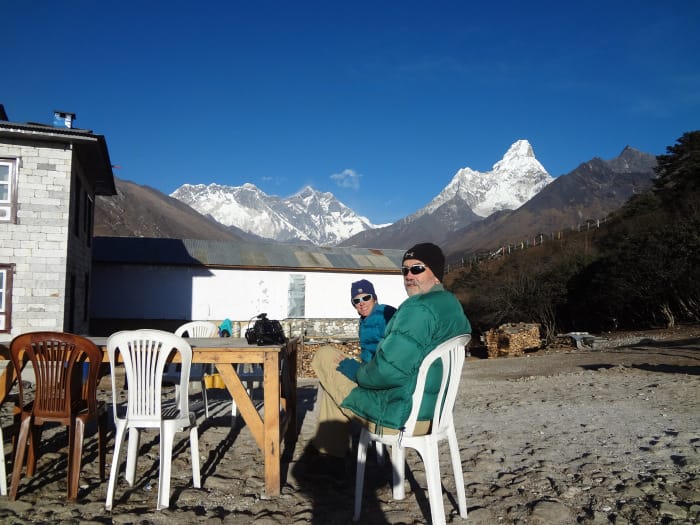
Mt.Everest is the highest peak in the world. Its synonymous name is “Sagarmatha”, which means forehead of the sky. Even though the highest mountain in the world was discovered many years ago, it is still a bucket list dream for many to climb Mount Everest as the feeling of being on top of the world is still as mysterious, beguiling, and magnificent as ever. Many have achieved this incredible feat and tried and failed, some with even casualties. Standing constantly tall against the shared sky of Nepal and Tibet, this mountain has many names like Chomolungma, Sagarmatha, Qomolungma, or Mt. Everest.
Although many want to climb Mount Everest, only seasoned climbers who can sacrifice a lot of time and money can succeed. This feat is so huge that it cannot be accomplished alone, climbers will need support from many people to succeed. They will need experienced organizers and guides who can help them climb Mount Everest safely and return and are willing to take responsibility for the whole expedition. We at Touch The Himalaya have organized and joined in on Everest Expeditions countless times during our 15 years as a Trekking and Expedition company.
Climbing Mount Everest
Mt. Everest has two main climbing routes, located at the southeast ridge from Nepal and the northeast ridge from Tibet, along with thirteen other less frequently climbed routes. The southeast ridge is technically easier and more frequently used among the two main routes. It attracts many highly experienced mountaineers as well as capable climbers who want to hire professional guides. During this expedition, we will move through the Sherpa Village, Buddhist monasteries, Khumbu Icefall, and the Lhotse Face.
While traversing through these geological regions proper equipment and experienced guides are a must. We at Touch The Himalaya have been doing expeditions for over 15 years and take your safety as our top priority while making sure you succeed in getting to the top of the world. Climbing Everest means traveling through 8000 meters of snow-capped mountains while being fully geared up. This makes the climbing extremely taxing due to the high altitude which may cause suffocation due to oxygen deprivation or altitude sickness.
Since it is a taxing journey it is recommended to test your endurance, ability to adapt to harsh conditions, and mountaineering skills. While you will be fully assisted throughout the journey by our team of experts it is also crucial that you are prepared enough to respect the climb and be fully satisfied when you reach the summit.
Some of the preparations needed for attempting and succeeding in the Everest Expedition are discussed below:
Physical Fitness:
The importance of great physical fitness cannot be overstated. To acquire the necessary level of fitness, a consistent, tough program must be followed for several months. We recommend a mountaineering-specific training course.
Technically Sound:
Climbers must be skilled in navigating ice, snow, and rocky terrain for several consecutive days. Essential skills include a broad spectrum of climbing techniques, from basic rock climbing to advanced crampon use on snow and ice, as well as proficient rope skills like rappelling and rope ascending. Additionally, you should be adept at campcraft and self-care in high-altitude conditions.
Experience with high altitudes:
Climbing experience on several 6000-7000m peaks, such as Island Peak, Mount Elbrus, Mount Kilimanjaro, or Mera Peak, is essential. Additionally, scaling an 8000m mountain like Makalu is highly recommended. These climbs will allow you to fine-tune your skills and equipment and understand how you handle extreme altitudes.
Requirements for the Everest Expedition
Touch The Himalaya has obtained a license from Nepal’s Ministry of Culture, Tourism, and Civil Aviation, allowing us to organize Himalayan expeditions. Foreign companies cannot obtain this permit or operate independently in Nepal; only Nepalese companies can provide full support for mountaineers. If you choose a Western company, they must work through a Nepalese company, incurring additional costs. Therefore, it is advisable to contact us directly. We ensure your safety and handle all legal, administrative, logistical, guiding, and support services from the day you land till the day you take off.
Types of equipment required for climbing Mount Everest
We at Touch the Himalaya can provide information on acquiring or renting the following equipment. Feel free to contact us regarding anything regarding equipment and the Everest expedition.
Climbing Equipment
- Ice Axe with Leash: Essential for ascending and descending icy slopes.
- Crampons: Attach to boots to provide traction on ice.
- Alpine Climbing Harness: Ensures safety when using ropes.
- Carabiners: (3 locking, 3 regular) for securing ropes and gear.
- Climbing Helmet: Protects against falling rocks and ice.
- Ascender: Aids in climbing fixed ropes.
- Rappel/Belay Device: Used for controlled descents.
- Prusiks: Provide additional safety on ropes.
- Adjustable 3 Section Ski or Trekking Poles: For stability on uneven terrain.
- Light Hiking Boots or Trekking Shoes: For comfort during lower altitude trekking.
- Camp Boots: Optional, insulated footwear for Base Camp.
- Double Plastic Climbing Boots with Altitude Liners: Provide warmth and protection at high altitudes.
- Fully Insulated Overboots: Additional insulation for extreme cold.
- Gaiters: Protect lower legs from snow and debris.
- Trekking Socks: (3 pairs) for comfort during hikes.
- Wool or Synthetic Socks: (4 pairs) for warmth.
- Liner Socks: (4 pairs) to reduce friction and prevent blisters.
Clothing
- Lightweight Long Underwear: (2-3 pairs tops & bottoms) for layering.
- Heavyweight Long Underwear: (1 pair) for added warmth.
- Lightweight Nylon Pants: (1-2 pairs) for flexibility and comfort.
- Short Sleeve Synthetic Shirt: (1-2 pairs) for moisture management.
- Synthetic/Soft Shell Jacket: For insulation and breathability.
- Insulated Synthetic Pants: For warmth.
- Down Pants: For extreme cold conditions.
- Expedition Down Parka: Essential for warmth at high altitudes.
- Insulated Synthetic Jacket: For layering and warmth.
- Hard Shell Jacket with Hood: Protection against wind and precipitation.
- Hard Shell Pants: Waterproof and windproof protection.
Gloves, Warmers and Mitts:
- Lightweight Synthetic Gloves: (1 pair) for dexterity.
- Heavyweight Synthetic/Soft Shell Gloves: (1 pair) for warmth and durability.
- Expedition Shell Gloves with Insulated Removable Liners: (1 pair) for extreme cold.
- Expedition Shell Mitts: (1 pair) for additional warmth.
- Hand Warmers and Toe Warmers: (3 sets each) for added warmth in extreme cold.
Headgear:
- Headlamp: With spare bulbs and batteries for visibility.
- Glacier Glasses: Protect eyes from intense UV rays.
- Baseball Cap/Sun Hat: For sun protection.Ski Goggles: Shield eyes from snow glare.
- Balaclava: (1 heavyweight, 1 lightweight) for face protection.
- Warm Synthetic/Wool Hat: For head warmth.
- Bandanas: (2) to shade the neck from the sun.
- Neoprene Face Mask: Optional, for extreme cold.
Personal Equipment:
- Expedition Backpack: (3,500 – 4,000 cu. in.) for carrying gear.
- Trekking Backpack: (2,000 – 2,500 cu. in.) optional for shorter hikes.
- Sleeping Bag: (Rated to at least -40°F) for warmth.
- Additional Sleeping Bag: (Rated to at least -20°F) for Base Camp.
- Self-Inflating Pads: (2) for sleeping comfort.
- Closed-Cell Foam Pad: For additional insulation.
- Cooking Gear: Including a 16oz plastic insulated mug, spoon, and bowl.
- Sunscreen: SPF 40 or better.
- Lipscreen: SPF 20 or better, at least 2 sticks.
- Water Bottles: (2 to 3) for hydration.
- Water Bottle Parkas: For insulation.
- Toiletry Bag: Including toilet paper, hand sanitizer, and a small towel.
- Pee Bottle: (1 liter) for convenience in the tent.
- Camp Knife or Multi-Tool: For various tasks.
- Thermos: (1 liter) for hot drinks.
- Camera Gear: Optional for documenting the journey.
- Compression Stuff Sacks: For efficient packing of sleeping bags and clothing.
First Aid
- Small Personal First-Aid Kit: For minor injuries and ailments.
- Drugs/Medications/Prescriptions: As needed
Field Equipment
- Estwing Geologic Rock Hammer: For rock sampling.
- Geologic Compass: For navigation.
- Hand Lens: (7x and 10x) for close examination of rocks.
- Rite in the Rain Geologic Field Notebook: For notes.
- Rite in the Rain “Trekker” All-Weather Pen: For writing in any condition.
- Mechanical Pencil: (0.5 mm) with an eraser.
- Small Protractor and Metric Ruler: For measurements.
- Waterproof Markers: (2) for labeling samples.
- Acid Bottle with 10% HCl: For rock testing.
- Field Pouch: For carrying field books and tools.
- Rock Sample Bags: (Heavy-duty freezer bags) for samples.
- Digital Camera and Video Camera: For documentation.
- Wristwatch with Altimeter/Barometer: For altitude and weather readings.
- GPS Receiver: For navigation.
- Insulated Bottle with Water or Hot Tea: For hydration.
- Energy Snacks: For sustenance.
- Sunscreen and SPF Chap Stick: For sun protection.
- Sunglasses/Goggles: For eye protection.
- Pocket Knife or Multi-Tool: For various tasks.
- Binoculars: For distant observations.
- Head Lamp: For visibility in low light.
- Cell Phone: For communication.
- Climbing Gear and Trekking Poles: For support and stability.
- Hand-Held Radio: For on-mountain communication.
- Safety Plan: Always inform others of your whereabouts.
- Field Partner (Guide): Never go alone for safety. Take a seasoned expert with experience in climbing Mount Everest.
Best Time to Climb Mount Everest
Mount Everest, the highest peak on Earth, challenges climbers with its difficult conditions. Choosing the right season for the Everest Expedition is essential for safety and success. Let’s explore how the different seasons influence climate, visibility, and crowd levels on Everest.
March to May (Favorable):
Spring is generally seen as the best time to climb Everest. As winter’s harshness wanes, temperatures at Basecamp rise from about -15 degrees in early March to +5 degrees by May. The stable weather during spring provides clear skies and lower wind speeds, ensuring excellent visibility for climbers
June to August (Unfavorable):
Summer on Mount Everest is hazardous due to heavy rains, high humidity, and the risk of avalanches and landslides. Fog and cloud cover limit visibility, complicating navigation. Warmer temperatures at lower altitudes cause unstable snow conditions, increasing the danger for climbers. Consequently, there are no expeditions on Everest during the summer.
September to November (Favorable):
Autumn is also a favorable season for climbing Mount Everest. After the monsoon, the weather stabilizes, offering clear skies and moderate temperatures. Conditions are typically dry with low wind speeds, creating optimal climbing conditions. At Basecamp, temperatures range from -10°C to -20°C (14°F to -4°F). Since it’s the fall, vibrant leaves, provide climbers with stunning views and a visually enriching experience.
December to February (Unfavorable):
Winter on Mount Everest is exceptionally harsh and unwelcoming for climbers. Basecamp temperatures plummet to -30°C (-22°F). The extreme cold, powerful winds, and heavy snowfall create significant safety risks. Frequent blizzards and snowstorms further reduce visibility. Due to these dangerous conditions, no expeditions take place on Everest during winter.
Time Taken to Climb Mount Everest:
Exploring the tallest giant, Everest, often dubbed “the roof of the world,” is far from any simple expedition. It’s not just scenic travel across picturesque snow-covered landscapes but poses significant risks, especially for those inexperienced or unacclimatized to high altitudes. To reduce these dangers, climbers go through a careful acclimatization process at Base Camp, which can span up to 40 days. Here, Sherpas support them, ensuring their bodies adjust gradually to the tension and reduced oxygen levels. Only after this crucial period can climbing Everest start.
The reward for the journey typically arrives on the 50th day, known as summit day—a climax of both excitement and challenge, particularly under favorable weather conditions. For visitors taking on this epic endeavor, the entire expedition takes approximately 58 days, from arrival in Kathmandu to reaching the summit. When conditions are favorable and climbers are in peak health, the climb usually takes around seven days. The return journey to Base Camp follows, on average about five days to complete the Everest Expedition.
Food and Meals during the expedition:
Above Base Camp, we provide a wide variety of nutritious, locally sourced, quick-cooking food to ensure you can prepare at least three meals a day and enjoy plenty of hot beverages. Our specially designed high-altitude stoves and a butane-propane expedition mix fuel make this possible. The food includes soup, local cheese and sausage, biscuits, dried noodles, potatoes, rice, porridge, butter, dried and canned vegetables, fruits, meats, fish, milk and sugar tea, powdered juice drinks, and chocolate.