Touch The Himalaya logo on a transparent background.

Amazing Island Peak Climbing - 19 Days

Destination

Himalaya, Nepal

Grade

Extreme

Start / End Point

Kathmandu

Accommodation

2/3 Star Hotel, 2/3 stars hotel, Guest house/ Lodge

Best Season

March-May/Sept-Dec

Meals Included

Breakfast/Lunch/Dinner

Activity

Climbing / Expedition

Max. Altitude

6,189 m (20,305 ft)

Ready for the ultimate high-altitude challenge? Conquer Island Peak’s icy headwall and soaring summit ridge for an unforgettable, wild adventure in the heart of the Everest region. Text-only version of this trek page, with the full itinerary, prices, departures and inclusions in Markdown: https://touchthehimalaya.com.np/island-peak-climbing.md

Highlights

  • Breathtaking panoramic views of some of the world’s highest peaks, including Mount Everest, Lhotse, Nuptse, Makalu, and Ama Dablam.
  • Takes you through picturesque Sherpa villages, rhododendron forests, and majestic valleys, providing an immersive cultural and natural experience.
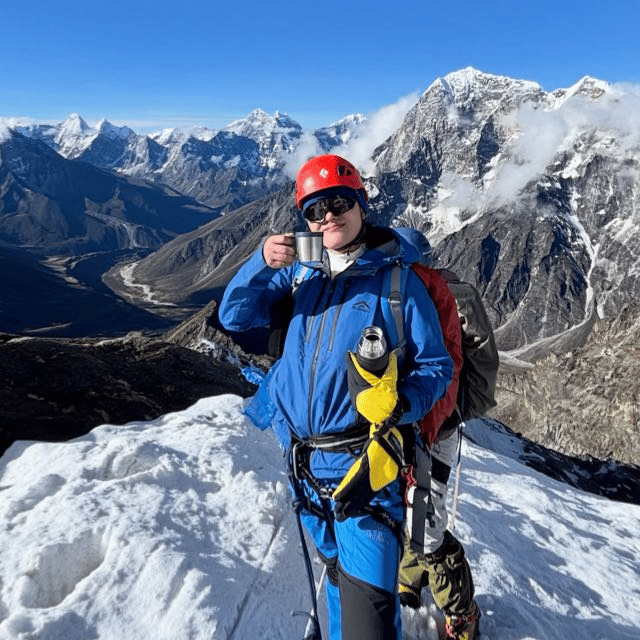
  • Island Peak Summit, at an altitude of 6,189 meters, rewards with breathtaking views of the surrounding peaks and glaciers, making all the effort and hard work worthwhile.
  • Explore remote and untouched landscapes, glaciers, and crevasses, adding to the thrill and excitement of the climb.
  • Interact with the Sherpa community, visit ancient monasteries, and learn about their traditions and way of life.
  • Everest Base Camp, which is an iconic destination, experiencing the buzzing atmosphere of climbers and mountaineering expeditions.
  • Witness the sunrise painting the surrounding peaks in golden hues, creating a breathtaking spectacle.
  • Explore the unusual flora and animals of the Sagarmatha National Park.

Island Peak Climbing Overview

Island Peak Climbing, also known as Imja Tse, is a popular mountaineering adventure in the Everest region of Nepal. It offers climbers the opportunity to experience the thrill of climbing a challenging peak while being surrounded by the majestic Himalayan mountains. Climbing Island Peak is a demanding activity due to the difficulty of the climb as well as accessibility concerns. The east flank and southwest ridge are the typical routes for Island Peak Climbing.

Island Peak is located in the Everest region of Nepal, within the Sagarmatha National Park. It stands at an elevation of 6,189 meters (20,305 feet), making it one of the prominent trekking peaks in the area.

Lukla is the starting point of most Everest region treks, including Island Peak climbing. You’ll fly from Kathmandu to Lukla, which is situated at an elevation of approximately 2,860 meters (9,383 feet). It serves as the gateway to the Khumbu Valley and is known for its unique mountain airstrip. After landing in Lukla, you’ll begin your trek towards Phakding. The trail descends through beautiful forests and crosses suspension bridges over the Dudh Koshi River. Phakding, located at around 2,610 meters (8,563 feet), offers a serene and picturesque setting.

From Phakding, you’ll continue trekking along the banks of the Dudh Koshi River, gradually ascending to Namche Bazaar. This vibrant Sherpa town is a major trading hub and serves as the commercial and administrative center of the Everest region. Namche Bazaar sits at an elevation of approximately 3,440 meters (11,286 feet) and provides stunning views of Everest and surrounding peaks.

Leaving Namche Bazaar, the trail takes you through rhododendron forests and traverses the Dudh Koshi River before ascending to Tengboche. Tengboche is home to one of the most important Buddhist monasteries in the region, Tengboche Monastery. Situated at an altitude of around 3,867 meters (12,687 feet), this monastery offers panoramic views of Everest, Ama Dablam, and other neighboring peaks.

Continuing your ascent, you’ll trek through Pangboche, a traditional Sherpa village, before reaching Dingboche. Dingboche is located at around 4,410 meters (14,468 feet) and provides a picturesque setting amidst terraced fields and stone-walled houses. It is a popular acclimatization stop before heading towards Island Peak.

From Dingboche, you’ll trek to Chhukung, a small settlement situated at around 4,730 meters (15,518 feet). Chhukung serves as a base for climbing peaks in the area, including Island Peak. Here, you’ll have the opportunity to acclimatize further, undergo training for technical climbing skills, and make necessary preparations for the ascent.

Leaving Chhukung, you’ll embark on a trail that leads to Island Peak Base Camp. The trek takes you through beautiful alpine landscapes, and glacial moraines, and offers views of Lhotse, Nuptse, and other magnificent peaks. Island Peak Base Camp is usually set at an elevation of around 5,200 meters (17,060 feet) and serves as a temporary home for climbers during the expedition.

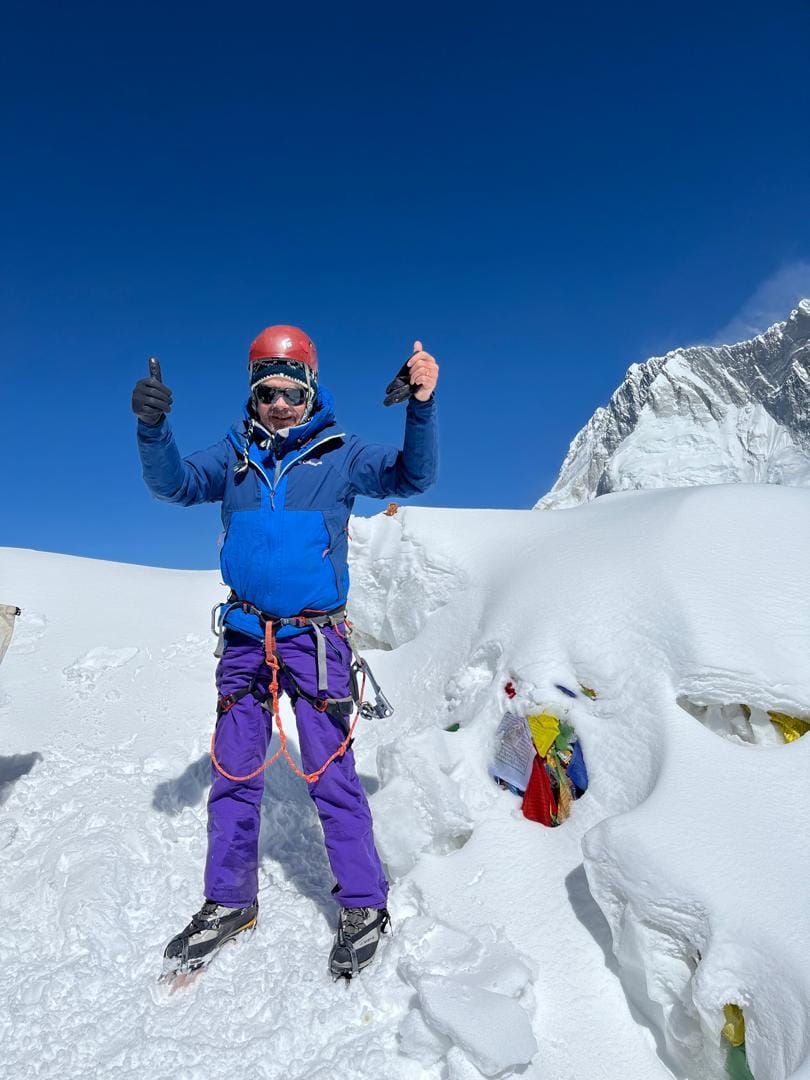
The final phase of the climb involves reaching the summit of Island Peak itself. From Base Camp, you’ll make your way to High Camp at around 5,600 meters (18,372 feet) and then embark on the summit push. The climb to the summit typically takes several hours and requires technical skills and determination. Reaching the summit, standing at 6,189 meters (20,305 feet), is a remarkable achievement and provides unforgettable views of the surrounding Himalayan peaks.

Terrain of Island Peak:

Although the terrain can be challenging and mountainous, the initial walk follows the path of the well-known Everest Base Camp trek.

Upon reaching the mountain, there will be sections of loose rock climbing to get to ‘crampon point,’ the beginning of the snow line. This part often requires hand support due to the fatigue from starting the climb at 4 a.m. The route includes a few steep drops and winds through scree and unstable ground formations.

From the crampon point, the race continues on snow, involving several precipices and the likelihood of being divided into groups of three or four over glaciated terrain. There are some very deep crevasses, requiring the use of ladders. While these tasks are not particularly difficult, they demand preparation and caution. The track is usually well-marked, and groups generally follow an official “path” across the frozen landscape to avoid the risk of falling into hidden gaps or crevasses.

At the base of the headwall, you can join the established lines, although their integrity needs to be checked. Although the grapples are generally secure and spaced around thirty meters apart, they can loosen, particularly in the evening. The lines, typically made of polypropylene instead of kernmantel, can become icy and catch on jumars. The steepest sections reach an angle of about 40 degrees, though it is less steep in the middle sections. There are numerous places to take a quick break, and it typically takes about 1.5 hours to ascend the 300 meters of the headwall. You will often find yourself behind other groups, which helps maintain a controlled pace.

“Up and down” lines are typically present on the headwall, but confusion can arise, so it’s crucial to ensure you are using the correct line, making it clear, and verifying that no one else is pulling on the same stay. Avoid tugging on the jump rope as it may serve as a safety device. Pulling back on the rope is generally not advisable. Nowadays, the route involves consistently challenging ice, so you must pay close attention to your crampons. Additionally, you’ll encounter delicate snow, requiring the creation of large snow buckets. Harder ice is more common before the monsoon, while fragile snow is more likely after a storm, although this largely depends on the current local conditions.

After reaching the summit edge, the track is open, contract, and frequently engages with people. Normally, there is space for a small group of about five people to congregate on the peak and there is just one established line that plans to the beat. You might need to make plans with other course participants. Several stairs are more exposed and strenuous than others, but the path isn’t difficult in pleasant weather with little to no wind. Before shifting the jumar across, be careful to continually clip the security karabiner over a grapple. This is frequently an extremely important security maneuver to keep a strategic distance from ever coming loose from the rope.

Even though the descent is tiring, the first abseil from the summit ridge needs extra care. For those with experience, it’s an easy descent with many ledges to stop on. Make sure no one is climbing while you’re clipped onto the downward line! Some people may slow things down due to their uncertainty about abseiling. While it’s sometimes possible to move at a good pace, there is often pressure as people get frustrated with slow progress, especially if it’s getting late.

When heading back during the day, be extremely cautious as the snow will be less compacted and the steps might have loosened. Keep the man ropes tight and always follow safe climbing practices. Stay on the designated path.

Best Seasons to Climb Island Peak:

The climate in the Everest region can vary depending on the season. Spring (March to May) and autumn (September to November) are considered the best seasons for climbing Island Peak. During these months, the weather is generally stable, with clear skies and mild temperatures. The daytime temperatures can range from 5°C to 15°C (41°F to 59°F), but it can get colder at higher altitudes and during the night.

Difficulty Level:

Island Peak is classified as a “trekking peak,” which means it is suitable for climbers with basic mountaineering skills and experience. However, it still requires physical fitness, endurance, and some technical climbing proficiency. The climb involves steep sections, snow slopes, and some technical sections near the summit. It is recommended for climbers to have prior experience with using crampons, ice axes, and ropes.

Equipments:

Some of the key equipment required for Island Peak climbing includes mountaineering boots, crampons, ice axes, climbing harness, helmet, ropes, carabiners, quickdraws, ascenders, descenders, Prusik cords, trekking poles, warm clothing (layers, down jacket, thermal base layers), a sleeping bag suitable for cold temperatures, sunglasses, sunscreen, headlamp, gloves, gaiters, and a backpack. These items are crucial for various aspects of the climb, such as navigating icy terrain, ascending steep sections, protecting against extreme weather conditions, and ensuring personal safety.

Accommodation:

During the trek to Island Peak Base Camp, you’ll find a range of accommodation options along the trail. The most common types of accommodation are teahouses or lodges, which provide basic amenities such as beds, blankets, and communal dining areas. These teahouses offer a cozy atmosphere, a chance to connect with other trekkers and enjoy local Sherpa hospitality. While the facilities may be simple, they offer a comfortable resting place after a day of trekking.

Meals:

Touch the Himalaya understands the importance of nutritious and delicious meals during your trek. Our package includes full-board meals, which consist of breakfast, lunch, and dinner. We ensure that the meals are hygienically prepared, offering a variety of local and international cuisines. We cater to dietary restrictions and preferences to the best of our abilities, ensuring you have an enjoyable dining experience throughout the trek.

Insurance:

We highly recommend travel insurance for the Island Peak Climbing, and we can assist you in acquiring suitable coverage. We work with reputable insurance providers to help you obtain comprehensive insurance that includes high-altitude trekking and helicopter evacuation in case of emergencies. We want to ensure that you are adequately protected throughout your trekking journey.

Safety During Island Peak Climbing:

Getting to the summit from the base camp Island Peak climbing can be a one-day activity for some people. Many Island Peak climbing enthusiasts, however, would rather enjoy mountaineering type climbing at high camp as this provides great pleasure to Island Peak Climbing and helps them climb safely. If you are physically fit and properly acclimatized, you can participate in the Island Peak Climbing Trail. Island Peak Climbing can be done in the months between March and May and also from September to December.

Permits for climbing Island Peak:

Sagarmatha National Park Entry Permit: The Sagarmatha National Park, a UNESCO World Heritage site, protects the Everest region’s natural and cultural treasures. Every visitor to the region needs to obtain a Sagarmatha National Park Entry Permit.

TIMS (Trekkers’ Information Management System) Card: The TIMS Card is mandatory for all trekkers in Nepal. It helps in maintaining records of trekkers and providing assistance in case of emergencies.

Island Peak Climbing Permit: As Island Peak is a designated trekking peak, climbers need a climbing permit specifically for Island Peak. This permit is issued by the Nepal Mountaineering Association (NMA) and requires a fee.

Trip Difficulty

Challenging Trek These treks are the most challenging and require a high level of physical fitness and mountaineering skills. The altitude may go up to 6,000 meters or more, and the terrain can be extremely rugged and steep, with challenging passes and technical sections. These treks often involve mountaineering and require special equipment and permits. Examples of difficult treks in Nepal are the Everest Three Passes Trek, Makalu Base Camp Trek, and the Kanchenjunga Base Camp Trek.

Day-to-Day Short Itinerary

  1. Day01Welcome at Tribhuvan International Airport, then transfer to your hotel.
  2. Day02A full day sightseeing tour of Kathmandu
  3. Day03Flight Kathmandu - Lukla then Trek to Phakding
  4. Day04Phakding to Namche Bazar
  5. Day05Rest/Acclimatize day in Namche BazarRest day
  6. Day06Namche Bazar to Tengboche-3860m
  7. Day07Tengboche to Dingboche-4410m
  8. Day08Dingboche Rest/ Acclimatize day-4410mRest day
  9. Day09Dingboche to Chukhung-4730m
  10. Day10Rest/ Acclimatize day-4730mRest day
  11. Day11Chukhung to island peak base camp-5080m.
  12. Day12Island peak base camp to high camp-5600m
  13. Day13Ascent of Island peak (6189 m) & back to base camp-5600mHighest point
  14. Day14Island base camp to Pangboche-3930m
  15. Day15Pangboche to Namche-3440m
  16. Day16Namche to Lukla
  17. Day17Fly back to kathmandu early in the morning (35 minutes) overnight at selected Hotel.
  18. Day18Rest Day in KathmanduRest day
  19. Day19Final departure for the airport

Amazing Island Peak Climbing Detail Itinerary

19 days
Day1 of 19

Welcome at Tribhuvan International Airport, then transfer to your hotel.

your hotelAltitude 1,400 mTrek
  • Max altitude1,400 m / 4,593 ft

After your long flight, our friendly office representative will greet you at the airport and whisk you away to your hotel in Kathmandu. The rest of the day is yours to explore the city or relax at your hotel. In the evening, enjoy a traditional Nepali meal and get a good night’s sleep before your big trek the next day.

Overnight2/3 Star Hotel

MealsBreakfast

Day2 of 19

A full day sightseeing tour of Kathmandu

A full day sightseeing tour of KathmanduAltitude 1,400 m
  • Max altitude1,400 m / 4,593 ft

Start your day with a delicious breakfast at your hotel before embarking on a full day sightseeing tour of Kathmandu. Visit the UNESCO World Heritage Sites of Hanuman Dhoka Square, Pashupatinath Temple, Swoyambhunath, and Boudhanath Stupa. Learn about the rich history and culture of Nepal as you explore these amazing places. In the afternoon, get a brief explanation of the further trek and receive your trek gear. Pack your bags with all the essentials and get ready for an unforgettable adventure!

Overnight2/3 stars hotel

MealsBreakfast

Day3 of 19

Flight Kathmandu - Lukla then Trek to Phakding

PhakdingAltitude 2,544 mFlight
  • Max altitude2,544 m / 8,346 ft

Start your Everest Base Camp Trek with a scenic flight to Lukla, the gateway to the Himalayas. After landing, trek to Phakding, a small village located at an altitude of 2,544 meters (8,344 feet). Along the way, you will enjoy stunning views of the surrounding mountains, including Mount Everest, Ama Dablam, and Thamserku. In Phakding, you can stay in a guest house or lodge and enjoy a hearty meal of Nepali food. The next day, you will continue your trek to Namche Bazaar, the main trekking hub in the Everest region.

OvernightGuest house/ Lodge

MealsBreakfast, Lunch & Dinner

Day4 of 19

Phakding to Namche Bazar

Namche BazarAltitude 3,445 mTrek
  • Max altitude3,445 m / 11,302 ft

The Phakding to Namche Bazar trek is a challenging but rewarding journey that takes you through some of the most stunning scenery in the Everest region. Starting at the village of Phakding, you will trek uphill for several hours, passing through lush forests and rhododendron meadows. As you ascend, you will be rewarded with breathtaking views of the surrounding mountains, including Mount Everest, Ama Dablam, and Thamserku. After a long day of trekking, you will arrive in the bustling town of Namche Bazar, where you can relax and enjoy the local culture and cuisine.

OvernightGuest house/ Lodge

MealsBreakfast, Lunch & Dinner

Day5 of 19

Rest/Acclimatize day in Namche Bazar

Rest/Acclimatize day in Namche BazarAltitude 3,445 mAcclimatization
  • Max altitude3,445 m / 11,302 ft

After a long day of trekking from Phakding, you will arrive in the bustling town of Namche Bazar, where you will spend the day acclimatizing to the altitude. This is an important part of any trek in the Everest region, as it allows your body to adjust to the thinner air and lower oxygen levels.

There are many things to do in Namche Bazar to help you acclimatize. You can visit the local market, where you can buy souvenirs and traditional Sherpa clothing. You can also visit the Buddhist monasteries, where you can learn about Sherpa culture and religion. Or, you can simply relax in your guesthouse and enjoy the views of the surrounding mountains.

No matter what you choose to do, make sure to take it easy and drink plenty of fluids. Acclimatizing to the altitude is important for your health and safety, and it will help you have a more enjoyable and successful trek.

OvernightGuest house/ Lodge

MealsBreakfast, Lunch & Dinner

Day6 of 19

Namche Bazar to Tengboche-3860m

TengbocheAltitude 3,867 mTrek
  • Max altitude3,867 m / 12,687 ft

The Namche Bazar to Tengboche trek is a challenging but rewarding journey that takes you through some of the most stunning scenery in the Everest region. Starting in the bustling town of Namche Bazar, you will trek uphill for several hours, passing through rhododendron forests and Sherpa villages. As you ascend, you will be rewarded with breathtaking views of the surrounding mountains, including Mount Everest, Ama Dablam, and Lhotse. After a long day of trekking, you will arrive at the Tengboche Monastery, a UNESCO World Heritage Site, where you can relax and enjoy the peace and tranquility of the surrounding mountains.

OvernightGuesthouse/Lodge

MealsBreakfast, Lunch & Dinner

Day7 of 19

Tengboche to Dingboche-4410m

DingbocheAltitude 4,412 mTrek
  • Max altitude4,412 m / 14,475 ft

The Tengboche to Dingboche trek is a beautiful and challenging day of trekking in the Everest region. The trail winds through forests and rhododendron meadows, offering stunning views of the surrounding mountains, including Ama Dablam, Lhotse, and Makalu. After a few hours of trekking, you will reach the village of Pangboche, where you can stop for lunch. From Pangboche, the trail continues uphill to Dingboche, which is located at an altitude of 4,410 meters (14,471 feet). Dingboche is a great place to acclimatize to the altitude and enjoy the views of the surrounding mountains.

Distance: 10.5 kilometers (6.5 miles)
Elevation gain: 952 meters (3,122 feet)
Duration: 6-7 hours

OvernightGuesthouese/Lodge

MealsBreakfast, Lunch & Dinner

Day8 of 19

Dingboche Rest/ Acclimatize day-4410m

Dingboche Rest/ Acclimatize dayAltitude 4,412 mAcclimatization
  • Max altitude4,412 m / 14,475 ft

After a long day of trekking from Tengboche, you will arrive in the village of Dingboche, where you will spend the day acclimatizing to the altitude. This is an important part of any trek in the Everest region, as it allows your body to adjust to the thinner air and lower oxygen levels.

There are many things to do in Dingboche to help you acclimatize. You can visit the local market, where you can buy souvenirs and traditional Sherpa clothing. You can also visit the Everest View Hotel, which offers stunning views of Mount Everest and the surrounding mountains. Or, you can simply relax in your guesthouse and enjoy the views of the surrounding mountains.

No matter what you choose to do, make sure to take it easy and drink plenty of fluids. Acclimatizing to the altitude is important for your health and safety, and it will help you have a more enjoyable and successful trek.

OvernightGuest house/Lodge

MealsBreakfast, Lunch & Dinner

Day9 of 19

Dingboche to Chukhung-4730m

ChukhungAltitude 4,730 mTrek
  • Max altitude4,730 m / 15,518 ft

The Dingboche to Chukhung trek is a moderate hike that takes trekkers through some of the most stunning scenery in the Everest region. The trail ascends to an altitude of 4,730 meters (15,518 feet), offering stunning views of the surrounding mountains, including Ama Dablam and Everest. Trekkers will stay in comfortable guesthouses and lodges along the way, and enjoy delicious meals of traditional Nepali cuisine. The trek is a great way to acclimatize to the high altitude and prepare for the more challenging treks that lie ahead.

OvernightGuest House/ Lodge

MealsBreakfast, Lunch & Dinner

Day10 of 19

Rest/ Acclimatize day-4730m

Rest/ Acclimatize dayAltitude 4,730 mAcclimatization
  • Max altitude4,730 m / 15,518 ft

Make the most of this incredible chance to rejuvenate and adapt to the lofty altitude. Take the day to delve into the captivating village, where endless wonders await, such as paying a visit to the local monastery that exudes an aura of serenity and spiritual mystique. Immerse yourself in the rich cultural tapestry of the village, traversing its meandering alleys and uncovering hidden gems. Alternatively, embrace the sheer pleasure of unwinding in the comfort of your guesthouse, basking in the breathtaking vistas that surround you. Indulge in this well-deserved respite, for tomorrow shall bring forth new adventures on your trekking expedition.

OvernightGuest House/ Lodge

MealsBreakfast, Lunch & Dinner

Day11 of 19

Chukhung to island peak base camp-5080m.

island peak base campAltitude 5,080 mTrekBase camp
  • Max altitude5,080 m / 16,667 ft

The trek from Chukhung to Island Peak Base Camp is a challenging but rewarding experience. The trail ascends to an altitude of 5,080 meters (16,666 feet), and offers stunning views of the surrounding mountains, including Everest, Lhotse, and Makalu.

The trek begins in the village of Chukhung, which is located at an altitude of 4,750 meters (15,584 feet). From Chukhung, the trail ascends gradually through the Chhukung Valley, passing through a number of small villages and monasteries. After about 3 hours, the trail reaches the Island Peak Base Camp, which is located at an altitude of 5,080 meters (16,666 feet).

The Island Peak Base Camp is a great place to rest and acclimatize to the high altitude before attempting the summit of Island Peak. The base camp is also a great place to explore the surrounding area, including the Chhukung Valley, the Lhotse Glacier, and the Imja Tsho Lake.

OvernightGuest House/ Lodge

MealsBreakfast, Lunch & Dinner

Day12 of 19

Island peak base camp to high camp-5600m

high campAltitude 5,600 mTrek
  • Max altitude5,600 m / 18,373 ft

The trek from Island Peak base camp to high camp is a challenging but rewarding experience. The maximum altitude of 5,600 meters (18,372 feet) requires you to be in good physical condition, but the stunning views of the surrounding mountains make it all worth it.

The trek begins at Island Peak base camp, which is located at an altitude of 5,200 meters (17,060 feet). From here, you will hike up a steep trail to high camp, which is located at an altitude of 5,600 meters (18,372 feet). The trail is well-maintained, but it is important to be aware of the altitude sickness that can occur at this high altitude.

You will spend one night at high camp before attempting to summit Island Peak. The summit hike is a challenging climb that requires the use of ropes, crampons, and ice axes. However, the views from the summit are simply breathtaking.

OvernightGuest House/ Lodge

MealsBreakfast, Lunch & Dinner

Day13 of 19

Ascent of Island peak & back to base camp-5600m

base campAltitude 6189 mTrekBase campHighest point
  • Max altitude6,189 m / 20,305 ft

You will ascend Island Peak (6,189 meters) and return to base camp (5,600 meters). The maximum altitude is 6,189 meters (20,305 feet). Meals will be provided three times a day: breakfast, lunch, and dinner. Accommodation will be in guest houses or lodges.

OvernightGuest House/ Lodge

MealsBreakfast, Lunch & Dinner

Day14 of 19

Island base camp to Pangboche-3930m

PangbocheAltitude 3,930 mTrek
  • Max altitude3,930 m / 12,894 ft

You will travel from Island Base Camp to Pangboche, which is at an altitude of 3,930 meters (12,893 feet). The maximum altitude of this trek is 3,930 meters. You will be provided with breakfast, lunch, and dinner. You will stay in a guest house or lodge.

OvernightGuest House/ Lodge

MealsBreakfast, Lunch & Dinner

Day15 of 19

Pangboche to Namche-3440m

NamcheAltitude 3,445 mTrek
  • Max altitude3,445 m / 11,302 ft

After a night’s rest in Pangboche, you set off on your trek to Namche Bazaar. The trail winds its way through pine forests and rhododendron bushes, and you’ll have stunning views of Mount Everest and the other peaks of the Himalayas. You’ll pass through the village of Tengboche, home to the Tengboche Monastery, one of the most important monasteries in the Khumbu region. After Tengboche, the trail descends to Namche Bazaar, the largest town in the Khumbu region. Namche Bazaar is a great place to rest and acclimatize to the high altitude.

OvernightGuest House/ Lodge

MealsBreakfast, Lunch & Dinner

Day16 of 19

Namche to Lukla

LuklaAltitude 2,860 mTrek
  • Max altitude2,860 m / 9,383 ft

You wake up in Namche Bazaar after a good night’s sleep in a guest house. After breakfast, you set off on your trek back to Lukla. The trail winds its way downhill through pine forests and several small villages. After a long day of trekking, you reach Lukla, where you will have lunch and then sleep in there.

OvernightGuest House/ Lodge

MealsBreakfast, Lunch & Dinner

Day17 of 19

Fly back to kathmandu early in the morning (35 minutes) overnight at selected Hotel.

kathmandu early in the morning overnight at selected HotelAltitude 1,400 mFlight
  • Max altitude1,400 m / 4,593 ft

After breakfast, you check out of your hotel and head to the airport for your final departure. As you drive to the airport, you reflect on your trip and all the amazing experiences you had. You send your client blessings and thank-you notes, and you look forward to making more connections in the future.

OvernightLodge/Guest house

MealsBreakfast, Lunch & Dinner

Day18 of 19

Rest Day in Kathmandu

Rest Day in KathmanduAltitude 1,400 mRest day
  • Max altitude1,400 m / 4,593 ft

You wake up in Kathmandu after a restful night’s sleep in a 2/3 star hotel. Today is your rest day, so you can spend your time as you please. You could go souvenir shopping in Thamel for gift items, relax at a spa, or explore the city. In the evening, you can meet up with your trekking group for some beers and dinner to celebrate your successful completion of the trek.

Overnight2/3 Star Hotel

MealsBreakfast

Day19 of 19

Final departure for the airport

Final departure for the airportAltitude 1,400 mDeparture
  • Max altitude1,400 m / 4,593 ft

Sending our client blessings and thank-you notes, as well as making more connections in the future.

Overnight2/3 Star hotel

MealsBreakfast

What is included in this trek package?

Transportation

  • ✓Airport pick up and drop off by Car, jeep, Hiace or Bus. Depends on the number of arrives.
  • ✓Internal transport and flight within Nepal as per the itinerary

Food Meals

  • ✓Complimentary welcome or farewell dinner according to the suitability of our client’s time.
  • ✓OPTIONAL: Three meals a day during the trek (If of required, we provide meal during the trekking)

Accommodation

  • ✓Beginning two nights stay on arrival in Kathmandu in tourist standard hotel with breakfast included (twin share basis)
  • ✓OPTIONAL: All accommodation during trek (If of required we arrange all accommodation)

Trekking Permits

  • ✓All necessary trekking and area permit & fees, (National Park area special permit and TIMs cards).

Guide Porter

  • ✓An experienced, English-speaking, government-licensed, first aid trained trekking guide and assistant guide (5 trekkers: 1 assistant guide)
  • ✓An expert local porters (2 trekkers: 1 porter)
  • ✓Basic First-aid kit (carried by trekking guide)

Other

  • ✓Duffel bag, (to be returned after trip completion), complementary trekking maps. If needed down jacket and sleeping bag will be provided in rent.
  • ✓All government and local taxes for Trekking, Agency service charge and government tax/vat.
  • ✓Achievement Certificate

Travel Insurance

  • ✓Staff costs including their salary, insurance, Equipment, transport, food and accommodations
  • ✓Rescue arrangements if necessary.

What is excluded

International Flights

  • ×International airfare and Nepal visa fee.

Accommodation

  • ×Lunch and Dinner in Kathmandu
  • ×Extra night accommodation in Kathmandu because of early arrival, late departure, early return from mountain (due to any reason) than in the scheduled itinerary

Travel Insurance

  • ×Personal insurance which covers medical, emergency evacuation, loss or theft of property.

Clothing Personal Gear

  • ×Personal gears and equipment.

Other Expenses

  • ×Personal expenses such as laundry, hot showers, battery charging, Wifi, etc
  • ×Entry fees and costs in sightseeing (temples, monasteries, etc)

Tips Gratuities

  • ×Tips and gratitude provided to guide and porter.

Amazing Island Peak Climbing Map

Download trek map

Amazing Island Peak Climbing Altitude Profile

02,0004,0006,0008,000 myour hotel.1,400 mDay 1A full daysightseeing tourof Kathmandu1,400 mDay 2Phakding2,544 mDay 3Namche Bazar3,445 mDay 4Rest/Acclimatizeday in NamcheBazar3,445 mDay 5Tengboche3,867 mDay 6Dingboche4,412 mDay 7Dingboche Rest/Acclimatize day4,412 mDay 8Chukhung4,730 mDay 9Rest/Acclimatize day4,730 mDay 10island peak basecamp5,080 mDay 11high camp5,600 mDay 12base camp6,189 mDay 13Pangboche3,930 mDay 14Namche3,445 mDay 15Lukla2,860 mDay 16kathmandu earlyin the morningovernight at1,400 mDay 17Rest Day inKathmandu1,400 mDay 18Final departurefor the airport1,400 mDay 19

You may also like

Exclusive Private Treks in Nepal

Any of our treks can be booked as a private trek on the dates you choose. Only your own group walks with your guide — we never add other travellers. Prefer company? Join a fixed group departure instead.

Why Choose A Private Trek?

Personalized itineraries

Tailor your trek to fit your schedule and preferences.

Dedicated guide & porter

Expert guidance with personal attention on restricted trails.

Safety & health

Custom acclimatisation and emergency support from Kathmandu.

Flexible schedule

Trek at your pace without the pressure of a mixed group.

Privacy & comfort

Perfect for couples, families, and small private groups.

From · 19 days

US$ 1,882pp

Chat with MadanTypically replies in a few minutes