Touch The Himalaya logo on a transparent background.

Pisang Peak Climbing - 18 Days

Destination

Himalaya, Nepal

Grade

Strenuous

Start / End Point

Kathmandu

Accommodation

2/3 Star Hotel, 2/3 stars hotel, Guest house/ Lodge

Best Season

March-May/Sept-Dec

Meals Included

Breakfast/Lunch/Dinner

Activity

Climbing / Expedition

Max. Altitude

6,091 m (19,984 ft)

Conquer the stunning Pisang Peak at 6,091 meters—a perfectly accessible Himalayan summit for adventurous trekkers that pairs an exhilarating snow and ice climb with the iconic Annapurna Circuit’s rich culture, breathtaking landscapes, and warm local… Text-only version of this trek page, with the full itinerary, prices, departures and inclusions in Markdown: https://touchthehimalaya.com.np/pisang-peak-climbing.md

Highlights

  • Majestic summit at 6,091 meters offering awe-inspiring views of the Annapurna Himalayas.
  • Perfect combination of Pisang Peak climbing and the famous Annapurna Circuit trek.
  • Suitable for climbers with limited mountaineering experience.
  • Immersion in the rich local culture of Gurungs, Tibetans, and others along the trek.
  • Diverse landscapes ranging from lush forests to barren high-altitude terrains.
  • Abundance of flora and fauna in the Annapurna region.
  • Charming village of Pisang showcasing traditional houses and friendly locals.
  • Detour to Upper Pisang and Ghyaru for stunning mountain views and Tibetan culture.
  • Vibrant town of Manang with monasteries and breathtaking views of the Annapurna range.
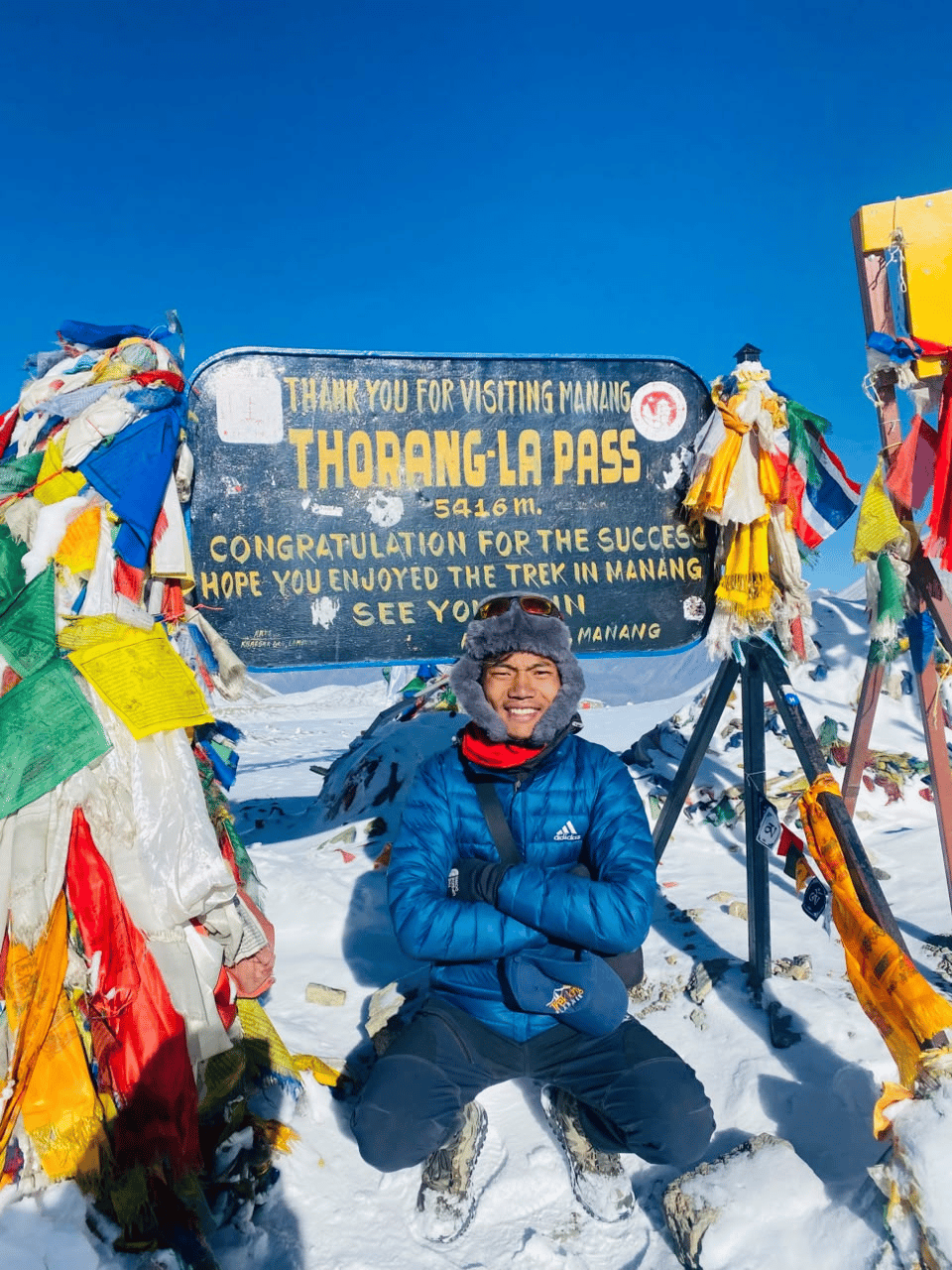
  • Challenge of crossing Thorong La Pass at 5,416 meters.
  • Side trip to Tilicho Lake, one of the highest lakes in the world.
  • Visit to the revered Muktinath Temple, a sacred site for Hindus and Buddhists.
  • Flight option from Jomsom to Pokhara for stunning aerial views.
  • Snow-covered high camp from November to March for a true alpine experience.

Pisang Peak Climbing

Pisang Peak Climbing Overview

In Nepal, Pisang Peak, standing at 6,091 meters high, is the most frequently climbed summit in the Annapurna Himalaya range. It is a suitable option for hikers without extensive mountaineering experience. The classic Annapurna Circuit trek can be combined with Pisang Peak climbing. The ascent to Pisang Peak follows a consistent slope of ice and snow above the settlement and yak pastures in Pisang. Compared to other peaks, Pisang Peak is considered relatively easier to climb.

The route to Pisang Peak starts from Pisang village, passing through sparse wood and meadows. The trek leads to a Kharka at 4,380 meters, which serves as the ideal location for setting up the base camp. From there, climbers proceed to the high camp at 5,400 meters on the shoulder of the South-West Ridge. The journey begins in Besisahar, located in the Marsyangdi River valley, and takes trekkers past diverse flora and fauna, offering views of Mount Manaslu and Lamjung Himal.

At Dharapani, a significant trail junction is reached while hiking through the Larkya La pass. The Manang valley is dominated by the impressive peaks of Annapurna and Damodar, and it boasts a rich cultural heritage and stunning landscapes. From this point, a challenging trek leads to Pisang Peak, with a tricky section that rewards climbers with panoramic views of the Annapurna Himalaya Range. The route then continues from the Manang valley to the top of the Thorong Pass at 5,416 meters, followed by a visit to the renowned temple of Muktinath.

The final leg of the trek leads to Jomsom, where you have the option to take a flight across the vast Himalayas to Pokhara or continue trekking through Ghorepani and Poon Hill. From the end of November to the end of March, the high camp is usually covered in snow. The last snow slope, although steep, is not particularly difficult to navigate. Following the clearly defined ridge, climbers reach the summit. The descent follows the same path.

As you trek towards the base camp of Pisang Peak, you will pass through the charming village of Pisang. This village provides a glimpse into the local culture and lifestyle of the Gurung and Tibetan communities. You can explore traditional houses, interact with friendly locals, and observe their daily activities. The authenticity of the village adds to the overall experience of the trek.

Additionally, you can choose to take a detour to Upper Pisang and Ghyaru after reaching Pisang Village. These higher-altitude settlements offer mesmerizing views of the surrounding mountains and provide an opportunity to immerse yourself in traditional Tibetan culture. You can visit monasteries, explore ancient ruins, and enjoy the tranquil atmosphere of these remote locations.

Continuing the trek, you will arrive at the town of Manang, situated at an altitude of 3,540 meters (11,614 feet). Manang serves as a popular acclimatization stop on the Annapurna Circuit and acts as a base for further exploration. In Manang, you can visit local monasteries, wander through narrow streets, and soak in the magnificent views of the Annapurna range that surrounds the town.

The Pisang Peak climbing expedition not only offers the thrill of reaching the summit but also allows trekkers to witness the incredible diversity of landscapes in the Annapurna region. From lush woodlands and meadows to rugged high-altitude terrain, each step reveals new natural wonders and scenic beauty.

Biodiversity:

The region around Pisang Peak offers diverse flora and fauna. As you trek through the lower elevations, you’ll pass through lush forests dominated by rhododendron, pine, and oak trees. These forests are home to various bird species and wildlife, including langur monkeys, deer, and Himalayan Thar. As you ascend, the vegetation becomes sparser, with alpine plants and hardy shrubs dotting the landscape. The region also boasts stunning views of the Annapurna and Dhaulagiri mountain ranges.

Culture:

The Annapurna region is inhabited by a mix of ethnic communities, including Gurungs and Manangis. These communities have distinct cultural traditions and practices. Along the trekking route to Pisang Peak, you’ll encounter charming villages where you can experience the local culture. The people are known for their warm hospitality, and you’ll have the opportunity to learn about their unique customs, festivals, and daily way of life. Buddhism is prevalent in the region, and you may come across monasteries, prayer flags, and intricate stone carvings.

Climate:

The climate in the Pisang Peak region can vary depending on the season and altitude. Spring (March to May) and autumn (September to November) are considered the best seasons for climbing Pisang Peak. During these months, the weather is generally stable, with mild temperatures and clear skies. Daytime temperatures at lower elevations range from 10°C to 20°C (50°F to 68°F), while temperatures at higher altitudes can drop below freezing. It’s important to be prepared for temperature fluctuations and possible weather changes, including rain and snowfall, especially at higher elevations.

Difficulty Level:

Pisang Peak climbing is considered a moderately difficult trekking peak in the Annapurna region of Nepal. It requires prior trekking experience and a good level of physical fitness. The climb involves sections of steep ascents and technical climbing, including traversing glaciers and using crampons and ice axes. Some rock scrambling may also be required. Altitude can pose a challenge, and climbers must be prepared for the effects of high altitude, including potential altitude sickness. Proper acclimatization and basic mountaineering skills are recommended to ensure a safe and successful ascent of Pisang Peak.

Duration:

The duration of a typical Pisang Peak climbing expedition can vary depending on the specific itinerary and climber’s pace. Generally, it takes around 16 to 20 days to complete the trek, including acclimatization days and the summit attempt. The duration allows for gradual acclimatization to the increasing altitude, ensuring climbers’ safety and maximizing their chances of a successful summit. It’s important to factor in rest days, which are crucial for adapting to the altitude and minimizing the risk of altitude-related illnesses.

Equipment Needed:

Climbing Pisang Peak requires specific equipment to ensure safety and comfort during the expedition. Essential equipment includes mountaineering boots, crampons, ice axes, climbing harness, helmet, ropes, carabiners, quickdraws, ascenders, descenders, prusik cords, trekking poles, warm clothing (layers, down jacket, thermal base layers), a sleeping bag suitable for cold temperatures, sunglasses, sunscreen, headlamp, gloves, gaiters, and a backpack. It’s crucial to have prior experience using this equipment and to ensure it is in good condition before embarking on the Pisang Peak climb. It is advisable to consult with experienced climbers or a reputable trekking company to obtain a detailed equipment list specific to the climb and weather conditions.

Accommodation:

When you choose “Touch the Himalayas” for your Pisang Peak climbing expedition, we will arrange accommodation for you during the trek. Along the trekking route, accommodation options typically include teahouses or lodges. These establishments provide basic yet comfortable rooms with twin beds or bunk beds. The availability of private or shared bathrooms may vary depending on the location and lodge. The quality of accommodation can vary, but the lodges generally offer a cozy and welcoming atmosphere to rest and recharge after a day of trekking.

Meals:

“Touch the Himalayas” ensures that trekkers are provided with meals throughout the climb. We offer three meals a day: breakfast, lunch, and dinner. These meals are typically served in the teahouses or lodges along the trekking route. The food options consist of a variety of local and international dishes to cater to different dietary preferences and requirements. You can expect to enjoy a combination of Nepali, Tibetan, and international cuisines, including rice, noodles, soups, vegetables, meat (if available), bread, and tea/coffee to keep you nourished and energized.

Insurance:

We highly recommend travel insurance for the Pisang Peak Climbing, and we can assist you in acquiring suitable coverage. We work with reputable insurance providers to help you obtain comprehensive insurance that includes high-altitude trekking and helicopter evacuation in case of emergencies. We want to ensure that you are adequately protected throughout your trekking journey.

Guides:

When climbing Pisang Peak with “Touch the Himalayas,” we provide experienced guides to accompany you throughout the expedition. These guides are knowledgeable about the Pisang Peak route, safety protocols, and climbing techniques. We assist with navigation, offer guidance on the technical sections of the climb, ensure the safety of the group, and provide support in case of any challenges or emergencies. The guides are typically experienced climbers with expertise in high-altitude mountaineering and have the necessary skills to make your Pisang Peak climbing experience safe and enjoyable.

Permits:

“Touch the Himalayas” assists trekkers in obtaining the necessary permits for Pisang Peak climbing. These permits typically include the Annapurna Conservation Area Permit (ACAP) and the climbing permit for Pisang Peak itself. We handle the paperwork and guide you through the permit application process, ensuring that all necessary permits are obtained before the expedition begins. These permits are essential to trek through the designated conservation area and to climb Pisang Peak in accordance with local regulations.

Trip Difficulty

Moderate Trek These treks are suitable for experienced trekkers who are physically fit and have some prior experience in high-altitude trekking. The altitude may exceed 5,000 meters, and the terrain can be challenging with steep ascents and descents, rocky trails, and occasional snow or ice. Examples of strenuous treks in Nepal are the Manaslu Circuit Trek, Dhaulagiri Circuit Trek, and the Upper Mustang Trek.

Day-to-Day Short Itinerary

  1. Day01Arrive Kathmandu and Transfer to hotel
  2. Day02Sightseeing and Trip introduction.
  3. Day03Drive Kathmandu to Jagat (1290 m | 4,232 ft) 8-9 Hours drive
  4. Day04Trek from ​Jagat to Dharapani (1,960m/6,430ft): 7-8 hours
  5. Day05Trek from Dharapani to Chame (2670m) 6-7 hours 15.7 kilometers / 9.7 miles.
  6. Day06Trek to Pisang (3200m).
  7. Day07Lower pisang trek to Pisang peak Base Camp (4573m)
  8. Day08Pisang peak base camp to Pisang peak High Camp(5030m).
  9. Day09High Camp Climb Pisang Peak 6091m then decent to Base camp.Highest point
  10. Day10Pisang peak base camp to Manang (3540 m)
  11. Day11Rest in Manang for extra acclimatization for Throngla Pass.Rest day
  12. Day12Trek Manang to Letdar (4200 m).
  13. Day13Trek to Thorong High Camp
  14. Day14Thorong La pass and reach Muktinath
  15. Day15Trek to Kagbeni for delicious Lunch , Gateway to Upper Mustang then trek to Jomsom
  16. Day16Drive or Fly Back to Pokhara
  17. Day17Tour of Pokhara City. Overnight stay in the Hotel in Pokhara.
  18. Day18Drive back to Kathmandu by Tourist Bus/Car/Flight.

Pisang Peak Climbing Detail Itinerary

18 days
Day1 of 18

Arrive Kathmandu and Transfer to hotel

hotelAltitude 1,400 mArrival
  • Max altitude1,400 m / 4,593 ft

Upon your arrival at Tribhuvan International Airport (TIA), you will be greeted by our office representative. They will kindly escort you to your hotel. The rest of the day is yours to enjoy at your leisure. You will spend the night at your hotel in Kathmandu. The hotel will be a 2/3 star accommodation and you will be provided with breakfast the next morning. The maximum altitude you will reach is 1400m/4593ft.

Overnight2/3 Star Hotel

MealsBreakfast

Day2 of 18

Sightseeing and Trip introduction.

SightseeingAltitude 1,400 m
  • Max altitude1,400 m / 4,593 ft

You will enjoy breakfast at your hotel before being picked up by our team and taken to our office for your trek briefing and preparation. In the afternoon, you will have the opportunity to go sightseeing in Kathmandu. You will visit some of the cultural heritage sites, including the famous world heritage sites of Swyambhunath and Kathmandu Durbar Square, also known as the Monkey Temple. After the sightseeing tour, you will be dropped off at your hotel for the night.

Overnight2/3 stars hotel

MealsBreakfast

Day3 of 18

Drive Kathmandu to Jagat 8-9 Hours drive

JagatAltitude 1290 mDrive day
  • Max altitude1,290 m / 4,232 ft
  • Drive time8–9 h

Early morning breakfast at the hotel, Our staff will pick you up and drive you to the bus park or a private vehicle. We travel by a beautiful bus or jeep to Jagat, which is where the Nar-Phu and Annapurna circuit trek begins. Dinner and an overnight stay at the Jagat Hotel, where we spend the night resting up for the hiking the following day.

Note from the traveler: Jagat is a tiny town well known for selling locals from the northern portion of the Manang District. The majority of the population is Buddhist and Hindu, and the town is located on the bank of the Marshyangdi River, You may anticipate seeing waterfalls, seeing monkeys, rice fields, lush forests, and, if the weather permits, getting our first glimpses of the Annapurna 2, Manaslu and more another mountain. If you look out on the road, there’s a good possibility you’ll also see waterfalls as you pass by a number of local landmarks.

OvernightGuest house/ Lodge

MealsBreakfast, Lunch & Dinner

Day4 of 18

Trek from ​Jagat to Dharapani: 7-8 hours

DharapaniAltitude 1,960 mTrek
  • Max altitude1,960 m / 6,430 ft
  • Trek duration7–8 h

After morning breakfast, continue the trek as it slowly descends until it reaches the river. The trek then continues through a lush forest. The ascent leads to a sharp-edged cliff facing the riverbank. Trek with the glorious backdrop of the towering Annapurna mountain ranges. Follow the Chyamje by crossing a suspension bridge. Climb steeply towards the slippery and physically challenging path to Sattale. Descend to a grassy riverbank that leads to Tal. Trek through the steep forested village of Karte. Enjoy viewing waterfalls and trek along the cliffs. Cross a suspension bridge and reach Dharapani. Stay overnight in Dharapani.

OvernightGuest House/Lodge

MealsBreakfast, Lunch & Dinner

Day5 of 18

Trek from Dharapani to Chame 6-7 hours 15.7 kilometers / 9.7 miles.

ChameAltitude 2670 mTrek
  • Trek distance15.7 km
  • Max altitude2,670 m / 8,760 ft
  • Trek duration6–7 h

After having breakfast in Dharapani, Your first Day trek start in the morning, You will continue to the forest of the Fir and rocky declivities with the view of the Manaslu and Annapurna II (7939m).

Chame is the capital of the Manag district situated in the bank of the river Marshyangdi where we gonna stay overnight.

OvernightGuest house/ Lodge

MealsBreakfast, Lunch & Dinner

Day6 of 18

Trek to Pisang.

PisangAltitude 3200 mTrek
  • Max altitude3,200 m / 10,499 ft

On this day, you will trek from Chame to Pisang. The maximum altitude you will reach during the trek is 3200m/10,498ft. During the trek, you will have the opportunity to see a spectacular waterfall near the Brathangs village, where a small stone memorial has been erected in memory of a Japanese hiker who died while passing the Ghat Thorong La after staying in snowstorms for many days. Pisang is located in the lap of the Pisang Peak, which is a popular peak to climb. You will be provided with breakfast, lunch, and dinner during the trek, and you will spend the night at a guest house or lodge.

OvernightGuest house/Lodge

MealsBreakfast, Lunch & Dinner

Day7 of 18

Lower pisang trek to Pisang peak Base Camp

Pisang peak Base CampAltitude 4573 mTrekBase camp
  • Max altitude4,573 m / 15,003 ft

The Lower Pisang Trek is a challenging and rewarding trek that takes you to the base camp of Pisang Peak, a 6091-meter peak in the Annapurna Himalaya range. Starting from Pisang village at 3185 meters, the 6-hour trek ascends through switchbacks to the base camp at 4573 meters, offering stunning views of the Annapurna range and taking you through forests, fields, and glaciers. This trek is perfect for adventure seekers looking to challenge themselves physically and mentally while experiencing the beauty of the Himalayas.

OvernightCamping/Tent camp

MealsBreakfast, Lunch & Dinner

Day8 of 18

Pisang peak base camp to Pisang peak High Camp.

Pisang peak High CampAltitude 5030 mTrek
  • Max altitude5,030 m / 16,503 ft

On this day, you will climb from Pisang Peak base camp to Pisang Peak High Camp, reaching a maximum altitude of 5030m/16,502ft. During the climb, you will learn how to fix ropes, receive climbing advice, and train with a HJT climbing guide near the base camp of Pisang Peak. You will spend the night at the top camp on Pisang Peak. Meals including breakfast, lunch, and dinner will be provided, and accommodation will be in camping tents.

OvernightCamping

MealsBreakfast, Lunch & Dinner

Day9 of 18

High Camp Climb Pisang Peak 6091m then decent to Base camp.

Base campAltitude 6,091 mTrekBase campHighest point
  • Max altitude6,091 m / 19,984 ft

We will begin our climb to the peak in the morning. After camp 1, we will ascend in the gully, make a right turn, and climb up a large stone field before crossing the ridge to the glacier. It is important to always be cautious around crevasses. Once we reach the top of Pisang Peak, at 6091 meters, we can enjoy our ascent before returning home to Base camp safely. The following day, we will return to the Pisang peak base camp.

OvernightCamping/ Tent

MealsBreakfast, Lunch & Dinner

Day10 of 18

Pisang peak base camp to Manang

ManangAltitude 3540 mTrek
  • Max altitude3,540 m / 11,614 ft

On this day, we will trek back from Pisang Peak base camp to Manang, reaching a maximum altitude of 3540m/11,614ft. Meals including breakfast, lunch, and dinner will be provided, and accommodation will be in a guest house or lodge.

OvernightGuest House/ Lodge

MealsBreakfast, Lunch & Dinner

Day11 of 18

Rest in Manang for extra acclimatization for Throngla Pass.

Rest in Manang for extra acclimatization for Throngla PassAltitude 3,540 mAcclimatizationPass crossing
  • Max altitude3,540 m / 11,614 ft

This day will be spent resting in Manang for acclimatization, with a maximum altitude of 3540m/11,614ft. Meals including breakfast, lunch, and dinner will be provided, and accommodation will be in a guest house or lodge. The Himalayan Rescue Association will provide a briefing on high altitude sickness and ways to stay safe from potential problems.

In addition, the Gangapurna Lake offers a beautiful view and the town can be explored on foot. Manang is also home to a mountaineering school operated by the Nepal Mountaineering Association, which offers basic training in mountaineering.

OvernightGuest House/ Lodge

MealsBreakfast, Lunch & Dinner

Day12 of 18

Trek Manang to Letdar.

LetdarAltitude 4200 mTrek
  • Max altitude4,200 m / 13,780 ft

On this day, we will trek from Manang to Letdar, reaching a maximum altitude of 4200m/13,779ft. Meals including breakfast, lunch, and dinner will be provided, and accommodation will be in a guest house or lodge. The landscape from Manang is more like the Tibetan plateau, and although the ascent seems more gradual, it can be harder to breathe and take longer to cover shorter distances due to the high altitude.

OvernightGuest House/ Lodge

MealsBreakfast, Lunch & Dinner

Day13 of 18

Trek to Thorong High Camp

Thorong High CampAltitude 4,800 mTrek
  • Max altitude4,800 m / 15,748 ft

Today, we will trek to Thorong High Camp, reaching a maximum altitude of 4800m/15,748ft. Meals including breakfast, lunch, and dinner will be provided, and accommodation will be in a guest house or lodge. This night can be difficult due to the lack of oxygen at high altitude. It is important to be prepared to wake up early the next morning for the most exciting day of the trek.

OvernightGuest House/ Lodge

MealsBreakfast, Lunch & Dinner

Day14 of 18

Thorong La pass and reach Muktinath

Thorong La passAltitude 5,416 mPass crossing
  • Max altitude5,416 m / 17,769 ft

We will start the climb early in the morning, around 4:30 am. This is the most anticipated day of the Nepal trip, as we will reach the top of the Thorong La pass at 5416m, which is the highest point of the entire trek. Muktinath is the name of the Hindu God of Salvation and holds great significance for both Hindus and Buddhists. The September-October festival is the most interesting and crowded time to visit. This is a great example of the co-relation and harmony between Hinduism and Buddhism.

OvernightGuest House/ Lodge

MealsBreakfast, Lunch & Dinner

Day15 of 18

Trek to Kagbeni for delicious Lunch , Gateway to Upper Mustang then trek to Jomsom

JomsomAltitude 2,800 mTrek
  • Max altitude2,800 m / 9,186 ft

On this day, we will trek to Kagbeni, which is the Gateway to Upper Mustang, reaching a maximum altitude of 2800m/9186ft. Meals including breakfast, lunch, and dinner will be provided, and accommodation will be in a guest house or lodge. Kagbeni is home to a monastery that is believed to be around 500 years old, located within the town. Upper Mustang is only accessible with a special permit that is granted in limited numbers per year with a high royalty fee of 500 USD per person for the government royalty alone, with a minimum of two people required, in addition to the cost of the trek itself.

After Having Lunch in Kagbeni and look souring of the village, we continue walk to Jomsom, which is the capital of Mustang district with the government offices. The Eco museum serves here with the collections of Mountains. Jomsom, where the airport is situated with the connection to Pokhara as well as connected Road way to pokhara.

Marpha is another beautiful village to explore if have time, Marpha village is one of the popular sattelment of Thakali peoples the local inhabitant and the apple garden and apple product is the most popular around the area.

OvernightGuest House/ Lodge

MealsBreakfast, Lunch & Dinner

Day16 of 18

Drive or Fly Back to Pokhara

PokharaAltitude 820 mDrive & fly
  • Max altitude820 m / 2,690 ft

Early morning after having breakfast, we either take half an hours scenic fly through the beautiful Annapurna Himalaya Range out to Pokhara or drive along the bank of Kaligandaki River crossing beautiful waterfalls and hot springs pool on the way.

Reaching in to pokhara, enjoy good food and drinks.

Overnight2/3 Star Hotel

MealsBreakfast, Lunch & Dinner

Day17 of 18

Tour of Pokhara City. Overnight stay in the Hotel in Pokhara.

Tour of Pokhara City. Overnight stay in the Hotel in PokharaAltitude 820 m
  • Max altitude820 m / 2,690 ft

Explore the beautiful city of Pokhara on a day tour. Visit the stunning Phewa Lake, the Bindabasini Temple, and the Gupteshwor Cave. Enjoy stunning views of the Annapurna Mountains from Sarangkot. Overnight stay in a hotel in Pokhara.

Overnight2/3 Star Hotel

MealsBreakfast, Lunch & Dinner

Day18 of 18

Drive back to Kathmandu by Tourist Bus/Car/Flight.

Kathmandu by Tourist Bus/Car/FlightAltitude 1,400 mDrive & fly
  • Max altitude1,400 m / 4,593 ft

No matter which option you choose, you will need to be aware of the maximum altitude of 1400 meters (4593 feet). If you are planning on driving, it is important to check the road conditions before you set off, as the roads can be treacherous in the mountains.

For meals, you can expect to have breakfast and lunch included in your package. If you are staying in a 2/3 star hotel, you will likely have a choice of Western and Nepalese cuisine.

For accommodation, you can expect to stay in a comfortable hotel with a good view of the mountains. 2/3 star hotels in Kathmandu offer a variety of amenities, including Wi-Fi, air conditioning, and a pool.

Overnight2/3 Star Hotel

MealsBreakfast & Lunch

What is included in this trek package?

Transportation

  • ✓Airport pick up and drop off by Car, jeep, Hiace or Bus. Depends on the number of arrives.
  • ✓Internal transport and flight within Nepal as per the itinerary

Food Meals

  • ✓Complimentary welcome or farewell dinner according to the suitability of our client’s time.
  • ✓Three meals a day during the trek

Accommodation

  • ✓Beginning two nights stay on arrival in Kathmandu in tourist standard hotel with breakfast included (twin share basis)
  • ✓All accommodation during trek

Trekking Permits

  • ✓All necessary trekking and area permit & fees, (National Park area special permit and TIMs cards).

Guide Porter

  • ✓An experienced, English-speaking, government-licensed, first aid trained trekking guide and assistant guide (10 trekkers: 1 assistant guide)
  • ✓An expert local porters (2 trekkers: 1 porter)
  • ✓Basic First-aid kit (carried by trekking guide)

Other

  • ✓Duffel bag, (to be returned after trip completion), complementary trekking maps. If needed down jacket and sleeping bag will be provided in rent.
  • ✓All government and local taxes for Trekking, Agency service charge and government tax/vat.
  • ✓Achievement Certificate

Travel Insurance

  • ✓Staff costs including their salary, insurance, Equipment, transport, food and accommodations
  • ✓Rescue arrangements if necessary.

What is excluded

International Flights

  • ×International airfare and Nepal visa fee.

Accommodation

  • ×Lunch and Dinner in Kathmandu
  • ×Extra night accommodation in Kathmandu because of early arrival, late departure, early return from mountain (due to any reason) than in the scheduled itinerary
  • ×Meal and accommodations. (can be arranged by company as per the package agreement )

Travel Insurance

  • ×Personal insurance which covers medical, emergency evacuation, loss or theft of property.

Clothing Personal Gear

  • ×Personal gears and equipment.

Other Expenses

  • ×Personal expenses such as laundry, hot showers, battery charging, Wifi, etc
  • ×Entry fees and costs in sightseeing (temples, monasteries, etc)

Tips Gratuities

  • ×Tips and gratitude provided to guide and porter.

Pisang Peak Climbing Map

Download trek map

Pisang Peak Climbing Altitude Profile

02,0004,0006,0008,000 mhotel1,400 mDay 1Sightseeing1,400 mDay 2Jagat1,290 mDay 3Dharapani1,960 mDay 4Chame2,670 mDay 5Pisang .3,200 mDay 6Pisang peak BaseCamp4,573 mDay 7Pisang peak HighCamp.5,030 mDay 8Base camp.6,091 mDay 9Manang3,540 mDay 10Rest in Manangfor extraacclimatization3,540 mDay 11Letdar .4,200 mDay 12Thorong HighCamp4,800 mDay 13Thorong La pass5,416 mDay 14Jomsom2,800 mDay 15Pokhara820 mDay 16Tour of PokharaCity. Overnightstay in the820 mDay 17Kathmandu byTouristBus/Car/Flight.1,400 mDay 18

You may also like

Exclusive Private Treks in Nepal

Any of our treks can be booked as a private trek on the dates you choose. Only your own group walks with your guide — we never add other travellers. Prefer company? Join a fixed group departure instead.

Why Choose A Private Trek?

Personalized itineraries

Tailor your trek to fit your schedule and preferences.

Dedicated guide & porter

Expert guidance with personal attention on restricted trails.

Safety & health

Custom acclimatisation and emergency support from Kathmandu.

Flexible schedule

Trek at your pace without the pressure of a mixed group.

Privacy & comfort

Perfect for couples, families, and small private groups.

From · 18 days

US$ 1,440pp

Chat with MadanTypically replies in a few minutes