Touch The Himalaya logo on a transparent background.

Upper Mustang Trek - 17 Days

Destination

Himalaya, Nepal

Grade

Challenging

Start / End Point

Pokhara

Accommodation

2/3 Star Hotel, 2/3 stars hotel, Guest house/ Lodge

Best Season

March-May/Sept-Dec

Meals Included

Breakfast | Lunch | Dinner

Activity

Trekking

Max. Altitude

3,880 m (12,730 ft)

Step into a lost kingdom on this epic 17-day trek through Nepal’s hidden Upper Mustang, where you’ll wander ancient walled cities, cross a surreal high-desert landscape, and discover centuries-old Tibetan Buddhist culture thriving in the rain shadow… Text-only version of this trek page, with the full itinerary, prices, departures and inclusions in Markdown: https://touchthehimalaya.com.np/upper-mustang-trek-17-days-trek.md

Highlights

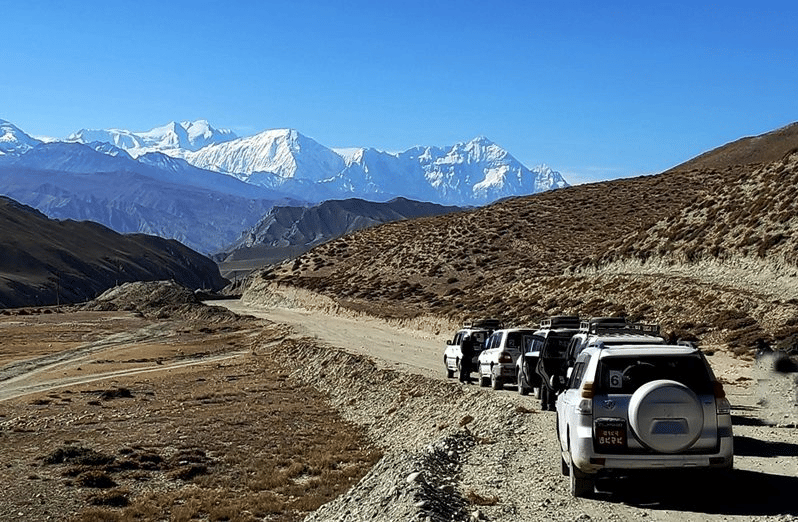
  • Encounter barren desert-like terrain, deep canyons, towering cliffs, and surreal rock formations.
  • Explore the medieval walled city of Lo Manthang, the capital of the former Mustang Kingdom.
  • Visit ancient monasteries such as Lo Gekar Monastery, Jampa Lhakhang, and Chhoede Monastery.
  • Fascinating cave dwellings carved into the cliffs, once used as meditation chambers by Buddhist monks.
  • Explore the intriguing cave dwellings of Chhoser, where monks have lived and meditated for centuries.
  • Opportunity to witness the vibrant Tiji Festival in Lo Manthang, celebrates the victory of good over evil and features colorful masked dances, music, and rituals performed by the…
  • Interact with the local people, known as Lobas, and learn about their traditional way of life, Tibetan-influenced culture, and intricate art forms.
  • Traditional houses, made of mud bricks and feature intricate woodwork.
  • Breathtaking views of snow-capped peaks, including Nilgiri, Annapurna, Dhaulagiri, and Mustang Himal.

Upper Mustang Trek Overview:

Trekking up the Upper Mustang offers an enthralling experience through one of Nepal’s most isolated and culturally intact areas. This walk, which begins in the north of the nation, leads hikers into the center of the erstwhile kingdom of Lo, which has preserved its Tibetan Buddhist customs and way of life for many years. Usually starting with a short flight from Pokhara, the trip goes through the town of Jomsom, which is marked by spectacular cliffs, deep gorges, and breathtaking rock formations. Its placement in the rain shadow of the Annapurna and Dhaulagiri peaks, which protect the area from the monsoon rains that saturate most of Nepal, is the cause of its distinctive geography.

Trekkers will encounter hard and spectacular terrain created by this dry environment.The Upper Mustang region is home to a wealth of traditional Tibetan Buddhist practices. The center of the region’s culture and spirituality is the walled city of Lo Manthang, which was the capital of the previous kingdom. This medieval city provides an insight into a way of life that hasn’t altered much in hundreds of years, with its tiny lanes, chortens, and prayer wheels.

There are numerous old monasteries along the trail, as well as caves where hermits and monks formerly lived and vibrant prayer flags that billow in the breeze. Trekkers frequently go to important locations like the Lo Manthang monasteries, Thubchen and Jampa, which have beautiful murals and antiques from the fifteenth century. The area is a living museum of Tibetan Buddhism because of how well its rich cultural legacy has been preserved by its remoteness.

The Upper Mustang Trek presents a formidable physical and logistical challenge in addition to being an adventure through a distinctive terrain and culture. The hike typically lasts 12 to 16 days, covering a distance of about 160 km (100 miles) and reaching a maximum elevation of 4,200 meters (13,780 feet) at its highest point. Trekkers need a special authorization to enter the area, which is still off-limits to preserve the integrity of the ecology and culture.

The walk is best done in the spring (March to May) and fall (September to November), when the weather is at its most agreeable.The Upper Mustang trip offers an unmatched adventure that combines natural beauty, cultural immersion, and a sensation of traveling back in time to a place where age-old customs still thrive amidst the grandeur of the Himalayas. This is true despite the difficulties that participants must overcome.

LOCATION:

In the farthest north of Nepal is Upper Mustang, sometimes known as the “Last Forbidden Kingdom,” a secluded and culturally diverse area. This region is located in the Mustang District of the Dhawalagiri Zone and was formerly a part of the ancient kingdom of Lo. Because of its geographic location in the shadow of the Annapurna and Dhaulagiri peaks, Upper Mustang experiences far less rainfall than other regions of Nepal, which adds to the region’s austere, arid terrain.

The area is distinguished from the verdant valleys usually associated with the Himalayas by its striking, desolate cliffs and steep gorges, which provide a distinctive morphology.The hiking path usually begins in the town of Jomsom, which is reachable from Pokhara with a short flight. From there, it passes through a number of isolated villages and historic monasteries until arriving at the walled city of Lo Manthang, which is the center of Upper Mustang’s culture and history.

Because of its relative remoteness, Upper Mustang has maintained its cultural identity as a primarily Tibetan Buddhist region. Up until 1992, the area was off-limits to foreigners, and it remains so today. This helps to keep the number of hikers to a minimum and preserves the area’s pristine state. Trekking to Upper Mustang, with its medieval communities, cave houses, and centuries-old monasteries, provides an uncommon window into a way of life that has not altered much over the decades.

The Upper Mustang walk offers a singularly enriching experience because of the untamed beauty of the surroundings, the rich cultural tapestry, and the friendly hospitality of the locals.In addition to offering travelers breath-taking vistas of the Himalayan peaks, the trip immerses hikers in the colorful and old Tibetan culture that still exists in this isolated region of Nepal.

The Upper Mustang trek Trail may be located in the Trans-Himalayan area of Nepal, which shares a border with Tibet to the north. The journey begins at the community of Jomsom, which is situated in the Kali Gandaki River valley, and concludes in the walled city of Lo Manthang, the former capital of the Kingdom of Mustang.

HEIGHT:

The Upper Mustang Trek Trail’s elevation ranges from 3,000 to 4,000 m (9,800 to 13,100 ft) above sea level on average, with several high passes exceeding 4,900 m (16,100 ft). The Lo La Pass, which is located at a height of 4,850 m, is the trek’s highest point (15,900 ft).

PHYSICAL FEATURES:

The Annapurna and Dhaulagiri mountain ranges’ rain shadow causes the Upper Mustang Trail’s position, which is why it is known for its rocky and dry terrain. The area is a high desert plateau with canyons, gorges, and cliffs with protruding edges. The Kali Gandaki River, which flows through the region and carves out one of the world’s deepest canyons, acts as a natural boundary between the Annapurna and Dhaulagiri peaks.

The Tukuche monastery, Kagbeni village, and the historic city of Lo Manthang are just a few of the significant sites that the Upper Mustang Trail travels through. The region is particularly renowned for its distinctive rock formations, including the red-hued Dhakmar cliffs.

Finally, the Upper Mustang Trail is a stunning and distinctive trekking route that provides a window into a remote and ancient Tibetan culture. Trekking in this region is both difficult and rewarding due to the rocky, dry terrain, high passes, deep gorges, and canyons, as well as the breathtaking vistas of the Annapurna and Dhaulagiri mountain ranges.

WILDLIFE & FLORA:

Numerous wildlife species, including snow leopards, Tibetan wolves, Himalayan black bears, blue sheep, and marmots, can be found along the Upper Mustang Trail. Numerous bird species, such as the Himalayan griffon, Tibetan snowcock, and bearded vultures, are visible to birdwatchers. Numerous fish species, including the renowned Himalayan Mahseer, can be found in the region’s Kali Gandaki River.

A variety of resistant plants can be found on the Upper Mustang Trail’s arid and high-altitude terrain. The Lali Gurans, Nepal’s official flower, is one of many rhododendron species that may be found in the area. The Himalayan cherry, mountain juniper, and other species of herbs and grasses are other plant species that can be found in the area and are used in Tibetan traditional medicine.

The Upper Mustang region is home to numerous ancient monasteries and temples that are decorated with elaborate Buddhist artwork and architecture in addition to the region’s natural flora and fauna.

The Upper Mustang Trail, in conclusion, is a distinctive and varied area that is home to a diversity of flora and animals, from unusual creatures to hardy mountain plants. Trekking across the area offers not only breathtaking natural vistas but also a chance to discover the history and culture of the area.

CULTURE & PEOPLE:

CUSTOMS & TRADITIONALS:

The people of the Upper Mustang area have a great deal in common with their Tibetan neighbors in terms of traditions and customs. The area is primarily Buddhist, and the terrain is dotted with old monasteries, stupas, and chortens. One of the most important religious celebrations in the area, the Tiji Festival, honors the triumph of good over evil. The celebration is distinguished by vibrant dances, music, and devotional rituals.

WAY OF LIFE:

Farmers comprise the majority of the population in the Upper Mustang region, and they raise crops including barley, buckwheat, and potatoes. Yaks and horses are utilized for transportation and for carrying products, and animal husbandry plays a significant role in their way of life. The inhabitants have a strong sense of solidarity and interdependence despite the severe environment and challenging terrain.

LOCAL CULTURE:

The people of the Upper Mustang region have preserved many of their long-forgotten customs and traditions, contributing to the region’s rich cultural history. Monasteries, temples, and palaces in the area display traditional Tibetan art and architecture. These buildings frequently have Thangka paintings, complex wood carvings, and stone statues. The area is renowned for its complex weaving, and the carpets and textiles made by local artisans are highly prized.

ACCOMMODATION & LOGISTICS:

As a result of its remote location and rugged terrain, Nepal’s Upper Mustang region has few options for lodging and logistics.

ACCOMODATION:

In the Upper Mustang region, teahouses are the most prevalent type of accommodation. These are fundamental lodges with straightforward lodging options like a bed and a blanket. Additionally, they offer food, which is typically Tibetan or Nepalese cuisine. There are numerous teahouses along the walking path that offer visitors to the area a practical and reasonably priced option. It is important to remember that not all locations in the area may have teahouses, and trekkers should be prepared to tent in some places.

LOGISTICS:

Trekkers need a special authorization to reach the Upper Mustang region because it is a restricted area. It is crucial to reserve your trip with a reliable organization that will take care of all the necessary logistics because this permit can only be obtained through a licensed trekking company. To make the most of your stay in the area, you must carefully organize your walk because the permit is pricey and only good for a short time.

Transportation to and from the area is another logistical consideration. Since it is difficult to reach the Upper Mustang region by road, most hikers fly to Jomsom, where they start their walk. To guarantee a simple and hassle-free trip, you must organize your lodging and transportation in advance.

ROUTES:

The Upper Mustang Trail offers a number of trekking routes that range from 10 to 25 days in duration and complexity. The most well-known route departs from Jomsom and travels down the Kali Gandaki River to the walled city of Lo Manthang. The route includes traveling through rocky terrain, deep gorges, and desert landscapes while crossing high mountain passes like the Lo La Pass.

EQUIPMENTS:

Although there is no technical climbing on the Upper Mustang Trail, it is a high-altitude trek, so trekkers should be ready for chilly temperatures, strong winds, and unpredictable weather. A comfortable sleeping bag, a down jacket, thermal layers, and waterproof clothing are essential pieces of kit. It’s also advised to bring trekking poles, a backpack, and reliable hiking boots. You can click on equipment for more information.

PERMITS:

For entry into the Upper Mustang region, foreigners must purchase a special permit, which costs $500 for 10 days and $50 for each additional day. A Trekker’s Information Management System (TIMS) card is also required, which costs around $20. It is crucial to plan ahead as there are a limited number of permits available. These permits can be obtained through a licensed trekking agency in Nepal.
For More Information:
Permits & Entrance Fee

OTHER NECESSARY INFORMATION:

High-altitude climbs can put you at risk for altitude sickness, so it’s critical to acclimate properly and consume lots of fluids. Additionally, trekkers should be mindful of the cultural and environmental sensitivity of the area and show respect for local traditions. To ensure safety, manage the terrain, and discover the local way of life, it is advised to hire a certified guide.

In conclusion, hiking the Upper Mustang Trail is a unique experience, and preparation and planning are essential for a secure and pleasurable expedition. For individuals who want to hike the Upper Mustang Trail, getting permits, getting the right gear, and hiring a qualified guide are essential procedures.

All the trip grading can be view here.

If you have any confusion for booking process please visit our booking process.

Trip Difficulty

Moderate Trek These treks are slightly more challenging than easy treks and require a moderate level of physical fitness. The altitude may go up to 4,000 meters, and the terrain can be rugged and steep at times. The trails are usually well-defined, but there may be some uphill climbs and rocky sections. Examples of moderate treks in Nepal are the Annapurna Base Camp Trek, Everest Base Camp Trek, and the Langtang Gosainkunda Trek.

Day-to-Day Short Itinerary

  1. Day01Welcome at Tribhuvan International Airport, then transfer to your hotel.
  2. Day02A full day sightseeing tour of Kathmandu
  3. Day03Kathmandu to Pokhara
  4. Day04Fly to Jomsom trek to Kagbeni ~ 3-4 hrs
  5. Day05Kagbeni to chele ~ 5-6 hours
  6. Day06Chele to Syanbochen ~ 6-7 hrs
  7. Day07Syanbochen to Ghaymi (5-6 hrs).
  8. Day08Ghaymi to Charang (4-5 hrs).
  9. Day09Charang to Lo-Mangthang (5-6 hrs).
  10. Day10Explore Lo-Mangthang
  11. Day11Lo-Mangthang to Drakmar (6-7 hrs).
  12. Day12​Dhakmar to Ghiling (5-6 hrs)
  13. Day13Ghiling to Chhuksang ~ 5-6 hrs
  14. Day14Chhuksang to Jomsom ~ 6-7 hrs
  15. Day15Fly Back to Kathmandu
  16. Day16Drive from Pokhara to Kathmandu
  17. Day17Departure Flight Back to Say Goodbye and good and safe journey

Upper Mustang Trek Detail Itinerary

17 days
Day1 of 17

Welcome at Tribhuvan International Airport, then transfer to your hotel.

your hotelAltitude 1,400 mTrek
  • Max altitude1,400 m / 4,593 ft

Upon your arrival at TIA, Our office person will kindly greet you upon arrival at the airport, and you will then be driven to your hotel. The remainder of the day is at leisure. Spend the night in Kathmandu at your hotel.

Overnight2/3 Star Hotel

MealsBreakfast

Day2 of 17

A full day sightseeing tour of Kathmandu

A full day sightseeing tour of KathmanduAltitude 1,400 m
  • Max altitude1,400 m / 4,593 ft
  • Early morning breakfast.
  • Half day world heritage cultural tour.
  • Visit UNESCO World Heritage Sites such as; Hanuman, Dhoka Square, Pashupatinath Temple, Swoyambhunath, Boudhanath Stupa and so on.
  • A brief explanation of the further trek. (Afternoon trek briefing and trek gear distribution.)
  • Putting all the essential things in the bag.
  • Stay overnight at the hotel.

Overnight2/3 stars hotel

MealsBreakfast

Day3 of 17

Kathmandu to Pokhara

PokharaAltitude 820 mTrek
  • Max altitude820 m / 2,690 ft
  • Early morning at around 7 am, we set off for Pokhara on a tourist bus.
  • On route, we will see more of countryside of Nepal that offers greeneries, rivers, villages, farms and beautiful mountain sceneries.
  • Afternoon, we reach Pokhara. Pokhara offers magnificent views of Dhaulagiri, Manaslu, Machhapuchhare, five peaks of Annapurna and others.
  • Pokhara is city of lakes and has numerous beautiful lakes. We can explore the most accessible and beautiful, Fewa Lake during the afternoon -enjoy boating too. Explore, relax and dine by tranquil Lake Fewa.
  • You can even do some shopping during evening hours.
  • Overnight in Pokhara.

OvernightGuest house/ Lodge

MealsBreakfast, Lunch & Dinner

Day4 of 17

Fly to Jomsom trek to Kagbeni ~ 3-4 hrs

Kagbeni ~Altitude 2,858 mFlight
  • Max altitude2,858 m / 9,377 ft
  • Trek duration3–4 h
  • After an early breakfast transfer to the airport for a morning flight to Jomsom, a super scenic flight of 20 minutes over the mountains with views of 8,000ers such as Annapurna & Dhaulagiri, brings you at Jomsom, the district headquarter of Mustang.
  • This is a large town, headquarter of the Mustang region; it is also a major village on the Kaligandaki area linking the age old Trans-Himalayan Salt Trade route to Tibet.
  • From Jomsom onwards it is very windy in the afternoon, Continue on the gradual path on the Kali Gandaki river bed for about 3 hrs and finally reaching at Ekley-bhatti village.
  • After good stop here an hour of easy walk takes us to Kagbeni, which lies at the bank of two rivers. Kagbeni is an interesting windswept villages situated on the main age old Trans-himalayan salt trade route to Tibet via Upper Mustang area. In Kagbeni a major tributory, Kak Khola, coming from Muktinath, meets Mustang Khola, and from there the river is called the Kali Gandaki.

OvernightGuest house | Lodge

MealsBreakfast | Lunch | Dinner

Day5 of 17

Kagbeni to chele ~ 5-6 hours

chele ~Altitude 3,050 mTrek
  • Max altitude3,050 m / 10,007 ft
  • Trek duration5–6 h
  • Our journey starts with a special permit check up and onwards to the riverbank of Kaligandaki up stream.
  • During the walk we have scenic picturesque place to stop through the sandy and windy trails. This trails follows the up and downhill.
  • Firstly we reach Tangbe village with narrow alleys amongst white washed houses, fields of buckwheat, barley, wheat and apple orchards.
  • From there we trek forward to Chhusang and after crossing the river head up to the huge red chunk of conglomerate that has fallen from the cliff above, forming a tunnel through which the Kaligandaki follows.
  • We head on to small ridges reach at Chele village.

OvernightGuest house/ Lodge

MealsBreakfast, Lunch & Dinner

Day6 of 17

Chele to Syanbochen ~ 6-7 hrs

Syanbochen ~Altitude 3,475 mTrek
  • Max altitude3,475 m / 11,401 ft
  • Trek duration6–7 h
  • Today, we start our trek again and walk further to Eklo Bhatti.
  • We climb to Taklam La Pass (3,624m/11,923 ft) through plateaus and narrow stretches with views of Tilicho Peak, Yakawa Kang and Damodar Danda.
  • Further descend a little to the village of Samar. Climb the trail that goes above Samar village to the ridge then descending steeply to a stream.
  • Another 3 hrs similar walk takes us to Syanbochen. On the way, we relax along the surrounding of cool streams and juniper trees.
  • Locals use the dried leaves of junipers as incenses to invite deities and start any auspicious work.
  • We also pass by a cave famously known as Ramchung Cave.

OvernightGuesthouse/Lodge

MealsBreakfast, Lunch & Dinner

Day7 of 17

Syanbochen to Ghaymi (5-6 hrs).

GhaymiAltitude 3,520 mTrek
  • Max altitude3,520 m / 11,549 ft
  • Trek duration5–6 h
  • After breakfast we trek uphill to the Yamda La (3,850m /12,667ft) passing a few teahouses, chortens and local villages which is like Tibetan style of houses with open Varanda.
  • We cross mountain passes, and an avenue of poplar trees and fields of Barley.
  • The climb to Nyi Pass (4,010m/13,193ft) would be a little longer.
  • Descend to our overnight stop at Ghaymi.
  • Ghayami, the third-largest village in the Lo region, is encircled by sizable fields, the majority of which are deserted.

OvernightGuesthouese/Lodge

MealsBreakfast, Lunch & Dinner

Day8 of 17

Ghaymi to Charang (4-5 hrs).

CharangAltitude 3,500 mTrek
  • Max altitude3,500 m / 11,483 ft
  • Trek duration4–5 h
  • Start the trek after breakfast with a pleasant walk.
  • After crossing Ghaymi Khola, the trail climbs to a plateau and passes beside a very long Mani wall, a sacred stone wall made by the followers Buddhism.
  • From the end of the wall the trail heads east to the village of Charang with a maze of fields, willow trees and houses separated by stone walls at the top of the Tsarang Chu canyon.
  • There is also a huge white dzong and red Gompa to get to our teahouse for tonight’s stop.

OvernightGuest house/Lodge

MealsBreakfast, Lunch & Dinner

Day9 of 17

Charang to Lo-Mangthang (5-6 hrs).

PokharaAltitude 3,700 mTrek
  • Max altitude3,700 m / 12,139 ft
  • Trek duration5–6 h
  • With a stunning view of the Nilgiri, Tilicho, Annapurna I, and Bhrikuti mountain, we trek to Lo-Mangthang today.
  • After crossing the river, the trail first drops to Charang Chu Canyon before beginning a difficult ascent.
  • The trail continues to gently ascent to the windswept Lo Pass at 3,850 meters, where you can glimpse the Lo-Mangthang Valley.
  • Views of the walled city on the Tibetan Border with its hills look lovely as you descend to Lo-Mangthang.
  • For the duration of the stop, we stay in a hotel.

OvernightGuest House/ Lodge

MealsBreakfast, Lunch & Dinner

Day10 of 17

Explore Lo-Mangthang

Explore LoAltitude 3,700 mDay hike
  • Max altitude3,700 m / 12,139 ft
  • Today we explore the surrounding areas.
  • Visit Namgyal Gompa and Tingkhar.
  • Namgyal Gompa situated on a hilltop serves as an important monastery of the local community and also as a local court.
  • After visiting Namgyal Gompa continue the tour to Tingkhar, the last main village to the northwest of Lo-Mangthang and stroll back to hotel.
  • The Tall Champa Lakhang “God house,” the crimson Thugchen Gompa, Chyodi Gompa, and the Entrance Hall, which are this town’s primary attractions, are also a possibility.
  • Another attraction is the four- storey building of the Raja’s palace as well as the surrounding panoramic views of the Himalaya.

OvernightGuest House/ Lodge

MealsBreakfast, Lunch & Dinner

Day11 of 17

Lo-Mangthang to Drakmar (6-7 hrs).

DrakmarAltitude 3,810 mTrekHighest point
  • Max altitude3,810 m / 12,500 ft
  • Trek duration6–7 h
  • While returning from Lo-Mangthan, we take a different route than that we came by.
  • Trek to Drakmar via Gyakar with more than 1200 years old Ghar Gompa with Guru Rinpoche as the primary figure.
  • The Gompa is also famous for its rock paintings. According to the legend, anyone who makes one wish at the Ghar Gompa, their wish is fulfilled. explore the local area.
  • Likelihood of dusty wind, so suggested to walk in the morning.

OvernightGuest House/ Lodge

MealsBreakfast, Lunch & Dinner

Day12 of 17

​Dhakmar to Ghiling (5-6 hrs)

GhilingAltitude 3,806 mTrek
  • Max altitude3,806 m / 12,487 ft
  • Trek duration5–6 h
  • Today, we get back to Ghiling as our journey for our overnight stay after a long walk takes 5-6 hrs.
  • After arrival and lunch enjoy the day exploring the area, but it will be dusty wind in the afternoon, better to walk in evening time.

OvernightGuest House/ Lodge

MealsBreakfast, Lunch & Dinner

Day13 of 17

Ghiling to Chhuksang ~ 5-6 hrs

Chhuksang ~Altitude 3,050 mTrek
  • Max altitude3,050 m / 10,007 ft
  • Trek duration5–6 h
  • We re-track back to Ghiling for the overnight stop after 5 hrs walk.
  • You will have wonderful scenery during the journey with a Himalayan view. Enjoy your trip and overnight at teahouse.

OvernightGuest House/ Lodge

MealsBreakfast, Lunch & Dinner

Day14 of 17

Chhuksang to Jomsom ~ 6-7 hrs

Jomsom ~Altitude 2,700 mTrek
  • Max altitude2,700 m / 8,858 ft
  • Trek duration6–7 h
  • Our last day of the day would be a long one.
  • Better to walk early start as before and trek to Kagbeni.
  • Finishing the upper Mustang trails and we join the normal Annapurna circuit trek.
  • After lunch at Kagbeni will head on to Jomsom for the overnight stop.
  • Or, if you can spare one more day, our guide would take you to Muktinath as well.

OvernightGuest House/ Lodge

MealsBreakfast, Lunch & Dinner

Day15 of 17

Fly Back to Kathmandu

KathmanduAltitude 820 mFlight
  • Max altitude820 m / 2,690 ft
  • After morning breakfast we check in the airport to fly back to Pokhara.
  • A 30 min dramatic flight to Pokhara between gorge of the two huge mountains Annapurna and Dhaulagiri.
  • On arrival at Pokhara airport guide will transfer to the lakeside hotel.
  • Rest of the time explores the lake and overnight at hotel.

OvernightGuest House/ Lodge

MealsBreakfast, Lunch & Dinner

Day16 of 17

Drive from Pokhara to Kathmandu

KathmanduAltitude 1,400 mDrive day
  • Max altitude1,400 m / 4,593 ft
  • After breakfast, we start our 200 kilometers drive back to Kathmandu.
  • Better to hold on the left pane of the vehicle to enjoy the sceneries through the route.
  • Upon arrival in Kathmandu, you will be transferred to your hotel.
  • There is nothing to do but trade emails with travel companions and organize the photos.
  • You can spend the evening leisurely, perhaps catch up on some last minute shopping and celebrate dinner together with Touch The Himalayann staffs.
  • Overnight at Kathmandu.

Overnight2/3 Star Hotel

MealsBreakfast

Day17 of 17

Departure Flight Back to Say Goodbye and good and safe journey

Say GoodbyeAltitude 1,400 mDeparture
  • Max altitude1,400 m / 4,593 ft
  • You are saying good bye to the mountains as your journey in Nepal comes to an end today!
  • We hope you enjoyed the tour with us, and are sure you`ll be back in your trip somewhere in the Himalaya again.
  • Approximately 3 hours before your scheduled flight a representative from Touch The Himalayan will transfer you to the airport.
  • On your way home you’ll have plenty of time to plan your next adventure in the wonderful country of Nepal.

Overnight2/3 Star hotel

MealsBreakfast

What is included in this trek package?

Transportation

  • ✓Airport pick up and drop off by Car, jeep, Hiace or Bus. Depends on the number of arrives.
  • ✓Kathmandu -Pokhara-Kathmandu Transfer by tourist bus and from Pokhara Jomsom-pokhara by flight.

Food Meals

  • ✓Complimentary welcome or farewell dinner according to the suitability of our client’s time.
  • ✓Three meals a day during the trek

Accommodation

  • ✓Beginning two nights stay on arrival in Kathmandu in tourist standard hotel with breakfast included (twin share basis)
  • ✓Two night Hotel in Pokhara (Before and after the trek)
  • ✓All accommodation during trek

Trekking Permits

  • ✓All necessary trekking permit & fees, Entry Permit, Annapurna Conservation Area (ACAP) permit, Upper Mustang Restricted Special permit and TIMs cards.

Guide Porter

  • ✓An experienced, English-speaking, government-licensed, first aid trained trekking guide and assistant guide (10 trekkers: 1 assistant guide)
  • ✓Expert local porters (2 trekkers: 1 porter)
  • ✓Basic First-aid kit (carried by trekking guide)

Other

  • ✓Duffel bag, (to be returned after trip completion), complementary trekking maps. If needed down jacket and sleeping bag will be provided in rent.
  • ✓All government and local taxes for Trekking, Agency service charge and government tax/vat.
  • ✓Achievement Certificate

Travel Insurance

  • ✓Staff costs including their salary, insurance, Equipment, transport, food and accommodations
  • ✓Rescue arrangements if necessary.

What is excluded

International Flights

  • ×International airfare and Nepal visa fee.

Accommodation

  • ×Lunch and Dinner in Kathmandu
  • ×Extra night accommodation in Kathmandu because of early arrival, late departure, early return from mountain (due to any reason) than in the scheduled itinerary

Travel Insurance

  • ×Personal insurance which covers medical, emergency evacuation, loss or theft of property.

Clothing Personal Gear

  • ×Personal gears and equipment.

Other Expenses

  • ×Personal expenses such as laundry, hot showers, battery charging, Wifi, etc
  • ×Entry fees and costs in sightseeing (temples, monasteries, etc)

Tips Gratuities

  • ×Tips and gratitude provided to guide and porter.

Upper Mustang Trek Map

Download trek map

Upper Mustang Trek Altitude Profile

01,0002,0003,0004,0005,000 myour hotel.1,400 mDay 1A full daysightseeing tourof Kathmandu1,400 mDay 2Pokhara820 mDay 3Kagbeni ~2,858 mDay 4chele ~3,050 mDay 5Syanbochen ~3,475 mDay 6Ghaymi .3,520 mDay 7Charang .3,500 mDay 8Lo3,700 mDay 9Explore Lo3,700 mDay 10Drakmar .3,810 mDay 11Ghiling3,806 mDay 12Chhuksang ~3,050 mDay 13Jomsom ~2,700 mDay 14Kathmandu820 mDay 15Say Goodbye1,400 mDay 16

You may also like

Exclusive Private Treks in Nepal

Any of our treks can be booked as a private trek on the dates you choose. Only your own group walks with your guide — we never add other travellers. Prefer company? Join a fixed group departure instead.

Why Choose A Private Trek?

Personalized itineraries

Tailor your trek to fit your schedule and preferences.

Dedicated guide & porter

Expert guidance with personal attention on restricted trails.

Safety & health

Custom acclimatisation and emergency support from Kathmandu.

Flexible schedule

Trek at your pace without the pressure of a mixed group.

Privacy & comfort

Perfect for couples, families, and small private groups.

From · 17 days

US$ 1,699pp

Chat with MadanTypically replies in a few minutes